A Mars Drill Sample Triggers the Next Step in Curiosity’s Laboratory Work
The Basque Lakes sample passed through linked mineral and volatile tests while cameras and sensors documented the terrain, atmosphere, radiation and shallow subsurface.
 By
Nathan Lieu
By
Nathan Lieu
NASA’s Curiosity rover combined laboratory analysis of a drilled Martian sample with imaging, chemistry and environmental monitoring during the planning week dated October 1, 2026.
The cycle spanning sols 5029 to 5035 centered on material collected from the “Basque Lakes” drill hole in Gale crater. The rover’s instruments addressed different parts of one coordinated investigation: laboratory systems examined the sample, remote-sensing tools surveyed nearby material, and cameras recorded the geological setting in which the drilling took place.
This combination matters because a sample inside the rover represents only one part of the scene. The laboratory instruments can analyze delivered material, but cameras and remote chemistry measurements provide the surrounding context needed to relate that material to the drill hole, exposed bedrock, sand ripples and loose fragments nearby.
The plan also illustrates the range of Curiosity’s science payload. Mastcam and ChemCam produced mosaics, while ChemCam and the Alpha Particle X-ray Spectrometer, or APXS, performed chemistry work. The Mars Hand Lens Imager, known as MAHLI, and the Mars Descent Imager, or MARDI, supplied images. REMS, RAD and DAN continued their systematic measurements even as laboratory work took priority.
The Basque Lakes sample passed through linked laboratory stages
Curiosity completed analysis of the drilled sample with the Chemistry and Mineralogy instrument, or CheMin. That work came before preparation of the Sample Analysis at Mars suite, known as SAM, for its own examination of the material. The sequence linked the two internal laboratories rather than treating their measurements as independent tasks.
CheMin data informed the decision to proceed with the SAM analysis. SAM then used its tunable laser spectrometer, or TLS, to measure volatiles released from the Basque Lakes sample. In this setting, “volatile” describes substances that can be released from material during analysis. The measurement alone does not establish evidence of life or provide a complete explanation of how the rock formed.
The TLS results were also intended to guide the next analytical decision. SAM was to use them to determine whether a separate mass-spectrometry analysis should be conducted the following week. That follow-up was conditional, not a result reported for sols 5029 to 5035. The planning account did not give the sample’s composition or the outcome of any later mass-spectrometry work.
NASA’s Curiosity mission update identifies the completion of CheMin analysis, the preparation of SAM and the TLS run as the central laboratory work of the week. That progression shows how one result can determine whether the rover commits resources to another test rather than automatically running every available analysis.
Laboratory operations consume a significant share of Curiosity’s daily power budget during a drill campaign. Other payload activities consequently had a smaller role, but they did not stop. The power that remained supported observations designed to connect the internal analysis with the visible workspace and to maintain recurring measurements of the Martian environment.

Imaging and chemistry mapped the sample’s surroundings
Mastcam acquired a 360-degree mosaic around the rover to document the geological setting of the Basque Lakes sample. Its color and resolution, compared with Navcam, also informed more focused observations, including Mastcam imaging of structures near the workspace and ChemCam Remote Micro-Imager observations of the “Cordillera” butte.
Mastcam and Navcam additionally planned seven photometry observations at fixed times of day. These measurements assessed how the observed spectral characteristics of targets changed as the Sun’s angle changed. That information supports interpretation of images taken both by Curiosity and by cameras in orbit.
| Instrument | Target or activity | Role in the plan |
|---|---|---|
| Mastcam | A 360-degree mosaic of the rover’s surroundings | Documented the geological setting around the Basque Lakes drill site. |
| ChemCam | The interior of the Basque Lakes drill hole | Collected additional chemistry information from the drilled target. |
| ChemCam | Sand ripples named “French Creek” | Examined material covering the bedrock near the workspace. |
| ChemCam | Loose gray clasts named “Wooley” and “Fireside” | Measured nearby fragments whose origin was not specified. |
The panoramic view and the focused chemistry measurements operated at different scales. Mastcam preserved the surrounding terrain as a visual framework for the drilled sample. ChemCam narrowed the investigation to the hole itself and to contrasting materials nearby, including the French Creek sand ripples and the loose gray clasts called Wooley and Fireside.
This division of labor connected material handled inside the rover with features still visible on the surface. Mirage News’s republication of the Curiosity planning account records the same 360-degree Mastcam survey and ChemCam measurements of the drill-hole interior, French Creek, Wooley and Fireside.
The observations did not establish a new conclusion about Gale crater’s geological history or identify the origin of the loose fragments. Their immediate role was to document the setting and expand the chemical comparison around Basque Lakes while the rover’s laboratory instruments examined the drilled material.
Environmental monitoring continued around the laboratory campaign
Curiosity maintained several recurring measurements alongside the sample investigation. These activities tracked conditions around the rover while CheMin and SAM concentrated on material from a specific drill hole:
- REMS continued regular monitoring of Martian weather.
- RAD maintained measurements of the radiation environment.
- DAN continued observations related to the shallow subsurface.
- Navcam and Mastcam monitored atmospheric dust loading, clouds and dust-devil activity.
These observations served a different purpose from the sample tests. The laboratory workflow targeted mineral and volatile information from material delivered into the rover, while the environmental instruments maintained a record of weather, radiation, subsurface conditions and activity in the atmosphere. Together, those streams placed a concentrated drill campaign within Curiosity’s continuing survey of Gale crater.
The planning cycle therefore joined three scales of investigation. CheMin and SAM worked directly on the Basque Lakes sample. Mastcam, Navcam and ChemCam documented the drill site and selected nearby targets. REMS, RAD and DAN sustained measurements extending beyond the immediate rock sample. The result was a coordinated science plan in which internal testing, surface observations and environmental monitoring supported distinct but connected parts of Curiosity’s work on Mars.
An unrelated internal article about research into tooth regeneration also concerns laboratory analysis, although it addresses regenerative medicine rather than planetary science.
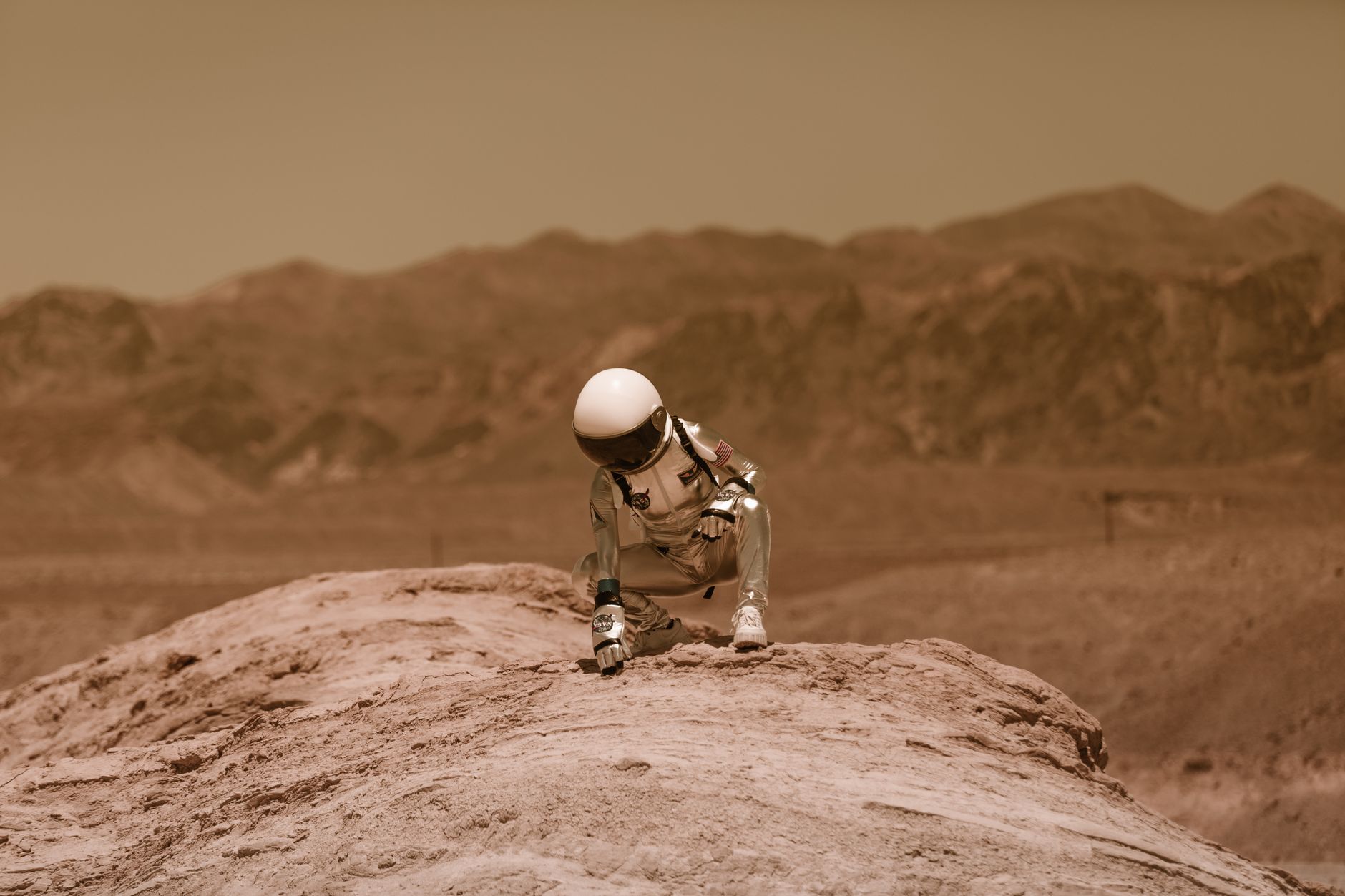
Featured image. Source: Pexels. Credit: RDNE Stock project. License: Pexels License.