“This Changes Everything”: Secret US Nuclear Bomb Production Shocks the World and Worries Global Powers
 By
Daniel Okada
By
Daniel Okada
| IN A NUTSHELL |
|
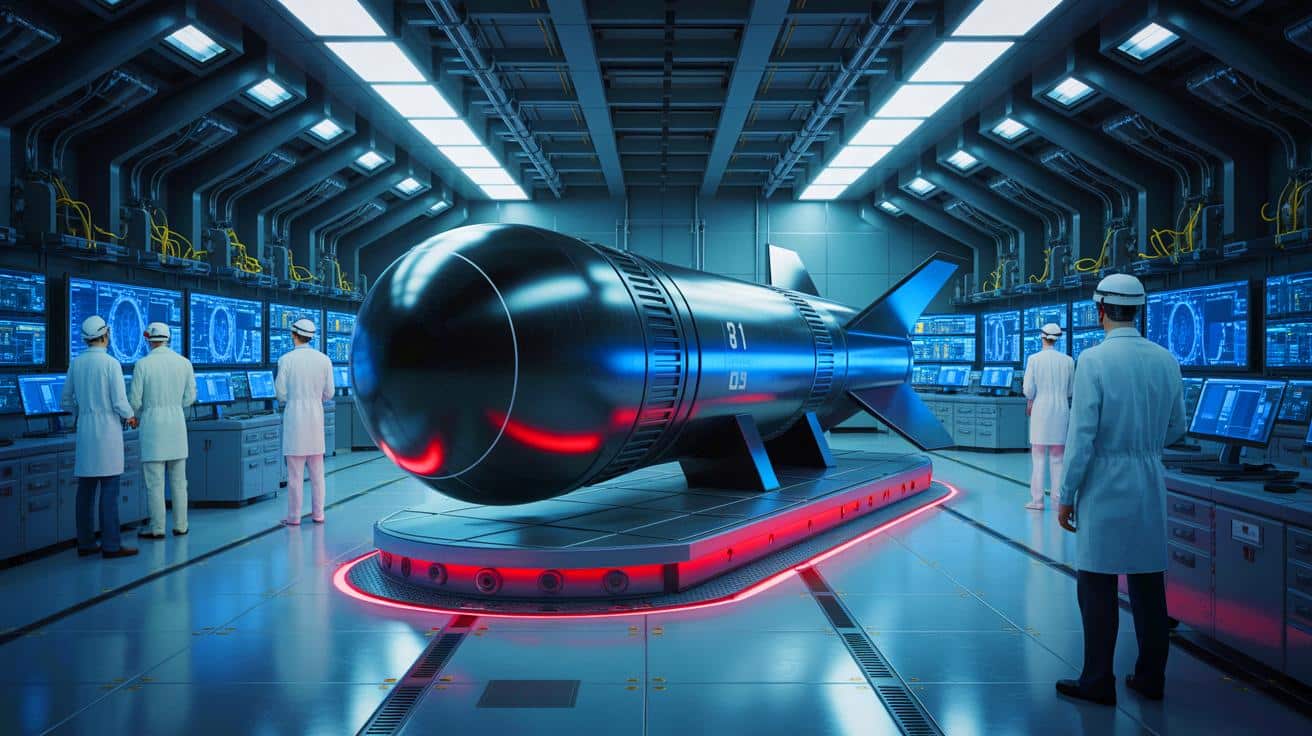
The Sandia National Laboratories have recently introduced a significant development in the United States’ nuclear arsenal with the unveiling of the B61-13 nuclear bomb. This advancement arrives seven months ahead of schedule and reflects a broader strategy to modernize the country’s nuclear deterrent capabilities. Despite the perception of nuclear weapons as remnants of the Cold War era, they remain a pivotal element in global geopolitics. The introduction of the B61-13 underscores the ongoing necessity for a modern and effective nuclear arsenal in the face of evolving global threats.
Modernizing the U.S. Nuclear Arsenal
The modernization of the United States’ nuclear arsenal is a strategic response to current geopolitical challenges. This comprehensive update program involves extending the lifespan of existing weapons while integrating new technologies. The B61-13 bomb, for instance, marks a significant leap forward with its variable yield capability, providing enhanced strategic flexibility. Such initiatives aim to ensure that American arsenals remain safe, reliable, and capable of addressing contemporary threats. The increased complexity of nuclear deterrence, exacerbated by the emergence of new nuclear actors, necessitates a proactive approach. The United States is committed to maintaining a credible deterrent while adapting its strategy to international developments.
Reducing Arsenals Amid New Threats
Since the fall of the Soviet Union, the United States and Russia have significantly reduced the number of nuclear warheads on alert, from peaks of 8,000 to 9,000 down to approximately 1,800. Despite these reductions, the landscape of nuclear deterrence has become more complex. So-called “rogue” states are striving to acquire nuclear weapons, posing new challenges to global security. Concurrently, China has transformed its arsenal into a more operational force, with around 24 weapons on alert. These developments highlight the need for a nuanced deterrence strategy, capable of effectively deterring threats while adapting to new strategic realities.
An Invisible Force Strikes: U.S. Stealth Technology Leaves Russian Naval Defenses Powerless
The Role of National Laboratories in Nuclear Security
National laboratories, such as Sandia, play a crucial role in maintaining the security and reliability of the U.S. nuclear arsenal. Their mission includes researching and developing advanced technologies, maintaining existing weapons, and continuously improving deterrence capabilities. Collaboration between these laboratories and the U.S. government ensures that nuclear weapons are not only effective but also meet the highest safety standards. By focusing on technological innovation, the laboratories help ensure that the United States retains a strategic advantage on the international stage. The development of the B61-13 is a prime example of this synergy between scientific expertise and strategic needs.
The Geopolitical Impact of Nuclear Modernization
The modernization of the U.S. nuclear arsenal has significant geopolitical implications. It influences international relations, particularly with nuclear powers like Russia and China. These nations may perceive American improvements as a potential threat, potentially prompting similar responses. Moreover, modernization can affect negotiations on nuclear non-proliferation and disarmament efforts. While some countries seek to reduce reliance on nuclear weapons, investments in advanced technologies may complicate discussions. Balancing the maintenance of a credible deterrent with the promotion of international stability remains a complex challenge for policymakers.
As the United States continues to modernize its nuclear arsenal, the question of global equilibrium arises. What will be the long-term impacts of these technological advancements on international stability and disarmament efforts?