
Martha Minow at MIT on how AI could shape U.S. democracy
At MIT’s Compton Lecture, the Harvard legal scholar weighed AI against four pillars of democracy and said she fears a loss of the Enlightenment.
 By
Daniel Okada
In brief
- Legal scholar Martha Minow gave this fall’s Compton Lecture at MIT, titled “Constituting Democracy in the Era of AI.”
- She judged the U.S. through four ingredients: education, reliable information, security from violence and fairness.
- Minow said AI could weaken independent thinking, yet could also serve as a tutor and help build shared information resources.
- In the Q&A she named loss of the Enlightenment as her deepest worry.
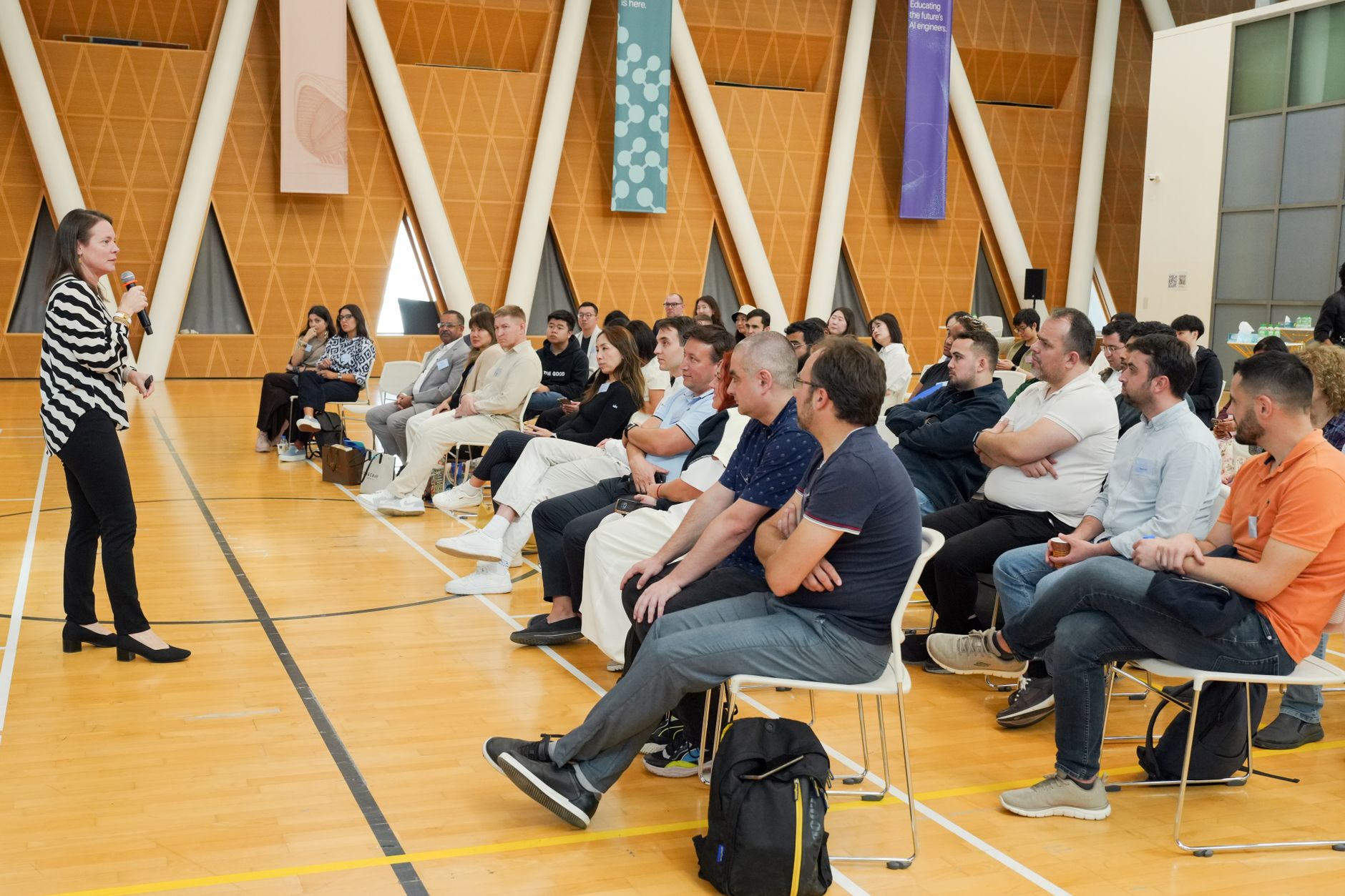
Martha Minow, a Harvard legal scholar, told an MIT audience that artificial intelligence is undermining American democracy in some respects but could also be used to reinforce it. She delivered this fall’s Compton Lecture on a Thursday, as MIT News reported, in a large audience setting in Huntington Hall, Room 10-250.
A lecture on a country judged harshly
Minow holds the title of 300th Anniversary University Professor at Harvard and is an expert in constitutional law and human rights. She joined the Harvard Law School faculty in 1981 and was its dean from 2009 through 2017. Her talk was titled “Constituting Democracy in the Era of AI.” MIT President Sally A. Kornbluth gave the introduction and later read audience questions aloud.
The Karl Taylor Compton Lecture Series began in 1957 and is described as the highest-profile event of its kind at MIT. Compton was the Institute’s ninth president, serving from 1930 to 1948, and then chaired the MIT Corporation from 1948 to 1954. Kornbluth said of him: “He guided MIT through the Great Depression and World War II.”
Minow opened bluntly. “It’s not a good time for democracy or constitutionalism,” she said. She listed violations of laws and norms, the stifling of free speech, diminished congressional authority, disregard of legal rulings and the vilification of others. She also cited Gallup polling in which 77% of people say the founders of the U.S. would be disappointed in the country’s current condition.
Four ingredients of democracy
Minow organized her assessment around four ingredients and asked how AI and other technology touch each one.
| Ingredient | What Minow raised |
|---|---|
| Education | Funding gaps between localities and regions, schools more segregated economically and ethnically over three decades, and AI that may weaken independent thinking |
| Reliable, accessible information | Fewer journalists, rising corruption where local media are absent, and a proposed “information commons” |
| Security from violence | A credible threat of violence against every judge she knows |
| Fairness | Discussed as one of several dimensions of societal fairness |
Where AI helps and where it harms
Much of the talk concerned schools. Minow said dominant AI platforms “supercharge” the strategies of social media companies, inducing passivity, and that sycophantic interfaces endanger young people’s capacity to think, remember and reason critically. “As AI surges, I think we have to learn to be smarter about how to use it, how to regulate it, and how to actually educate people about the costs of mindless using,” she said.
She argued the trend can be reversed. Existing models and interfaces can offer nudges, questions and hints instead of replacing student work, in the manner of a tutor. She urged the MIT audience to build better tools than those now available, along with assessments that are more meaningful and resistant to cheating.
On information, she noted that modern media technology has coincided with a 75% drop in journalists, with corruption rising where local media have vanished. She proposed that civic-minded technologists work toward one or many widely used information commons so people can reach more reliable material.
Security and the fear of losing the Enlightenment
On security, Minow was stark. She said the country is on the brink and that every judge she knows faces a credible threat of violence.
“We’re on the brink right now.”
Martha Minow, Harvard University
She still struck hopeful notes, saying a turnaround is possible if people at MIT and elsewhere devote time and talent to real solutions. “We have to actually invent the world that we want to live in,” she said.
In the Q&A, Kornbluth asked her to name her central concern. “I worry about the loss of the Enlightenment,” Minow replied. She described it as the belief in reason, testing hypotheses and rejecting myths in the face of evidence, along with the toleration and wider participation that came with it. That, she said, is why disinformation and the loss of critical thinking in schools matter so much to her. Having spent much of her career thinking about mass violence, she added, she worries the country is abandoning that tradition.
Photo: This And No Internet 25 / Pexels