How planets might form around the remains of dead stars
White dwarfs are the cooling cores of stars like the Sun. Here is how astronomers read their chemistry, and why a planet born from stellar debris is an idea that still needs proof.
 By
Nathan Lieu
By
Nathan Lieu
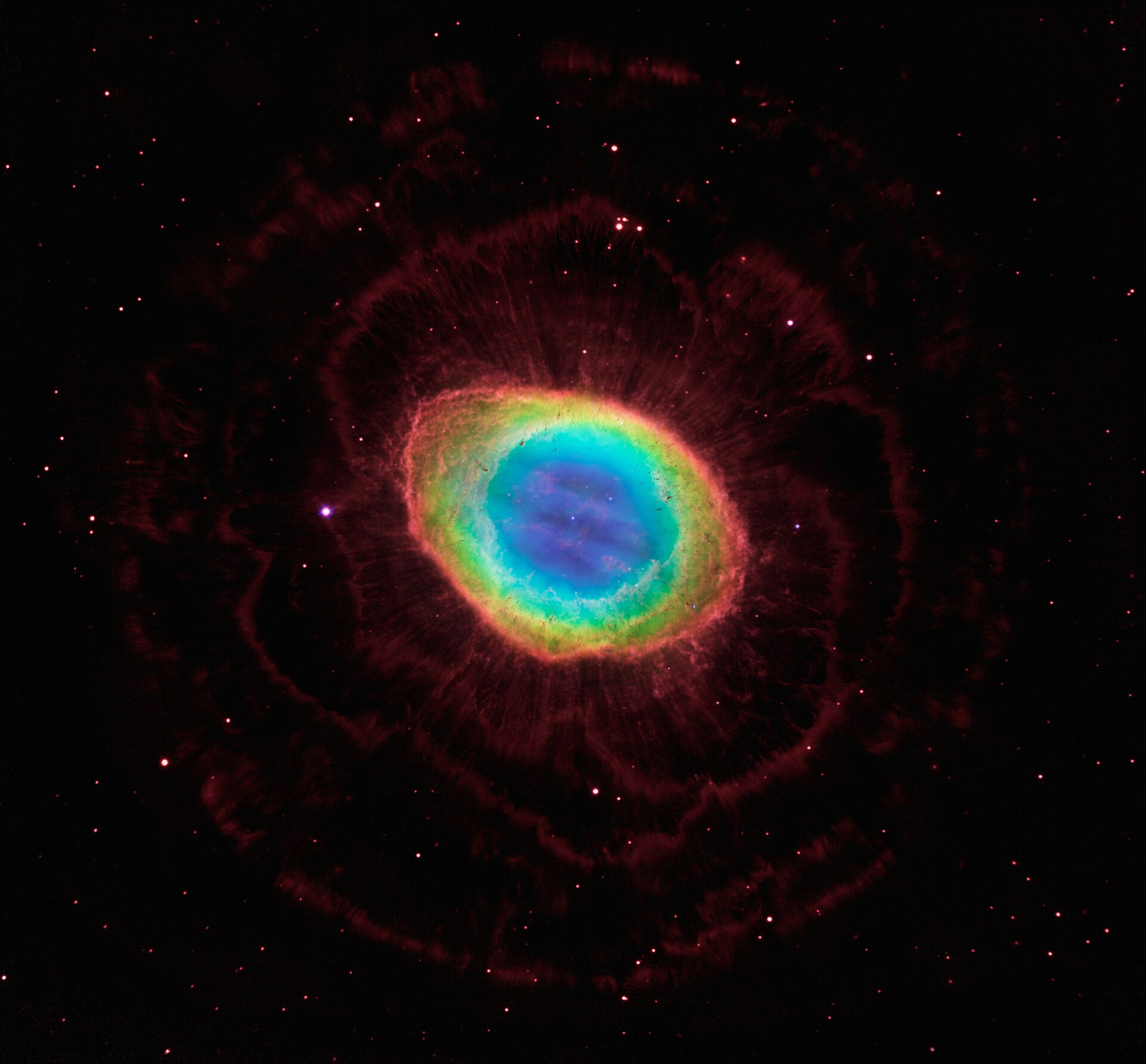
When a star like the Sun reaches the end of its life, it does not vanish in a blaze. It swells, sheds its outer layers into space and leaves behind a small, dense, glowing core called a white dwarf. For a long time, astronomers assumed that anything circling such a remnant was either destroyed or pushed far away. Yet a growing body of observations suggests that planets, or at least the rubble of planets, can survive around these dead stars, and that new worlds might even form from the debris. Here is how that idea works and why it is both exciting and difficult to prove.
In brief
- It swells, sheds its outer layers into space and leaves behind a small, dense, glowing core called a white dwarf.
- Planets in our own solar system formed from a disk of gas and dust around a young star.
- With better tools and patient reanalysis, old observations keep yielding fresh insights, and the dead stars in our galaxy remain far more lively than their name suggests.
What a white dwarf really is
A white dwarf is the exposed core of a star that has used up the nuclear fuel it needed to keep burning. It is no longer a furnace; it simply cools, very slowly, over spans of time longer than the present age of the universe. Although it is roughly the size of a planet, it holds a mass comparable to a star, which makes its gravity intense. Heavy elements sink quickly toward the center, so the atmosphere of a white dwarf should be almost pure hydrogen or helium.
That is why surprises are so valuable. When astronomers detect heavy elements such as metals in the thin outer layer of a white dwarf, they know those elements cannot be original. Something must have fallen in recently, in cosmic terms, and the likeliest suspects are asteroids, comets or planetary fragments pulled apart by the star’s gravity.
Reading the chemistry of a dead star
Astronomers cannot send a probe to a distant star, so they decode its light. Each element absorbs light at specific wavelengths, leaving a pattern of dark lines in the spectrum, like a fingerprint. By comparing those lines with laboratory references, researchers can work out which elements are present in the atmosphere of a white dwarf and in what proportions.
The method has limits. A fingerprint can be hard to read when the reference data are incomplete, which is why updated chemical databases can reveal features that were once unexplained. An old observation sitting in an archive may hold an answer that nobody could see at the time, simply because the tools to interpret it did not exist yet.
Second-generation planets
Planets in our own solar system formed from a disk of gas and dust around a young star. A second-generation planet follows a similar recipe but a different timeline: it would be assembled from the cloud of material a star releases as it dies. In theory, a disk of such debris could cool, clump and give rise to a planet around the white dwarf that remains.
The idea is intriguing, because it implies that planets do not have to be older than the star they orbit. It also raises questions. Would such a planet look like a rocky world, a gas giant or something stranger? Could it ever be habitable? For now, no one can answer these questions, and researchers are careful to describe any candidate as a hypothesis, not a confirmed discovery.
Why caution matters
Claims about planets around dead stars deserve a measured tone. A chemical clue can point toward an explanation without proving it. The same signature might come from other processes, such as material from a destroyed asteroid or a companion object that is not a planet at all. Confirming a second-generation planet would require independent evidence, for example a direct detection, repeat observations over time or a different method that reaches the same conclusion.
That is how science normally advances. A promising lead is published, other teams test it, and the idea either gains support or fades. Readers who follow astronomy news can apply a simple rule: look for words such as candidate, may, suggests or possible, and treat them as signs that the work is still open to challenge.
What this tells us about planetary systems
Studying white dwarfs offers a preview of the distant future of our own solar system. When the Sun eventually becomes a white dwarf, the inner planets will be profoundly affected, and what remains may feed the same kind of debris disks we see today around other stars. Each observation therefore helps refine our picture of how planetary systems age, which worlds can survive the death of their star and how matter is recycled across generations of stars and planets.
Even without a confirmed planet, the research shows how much archived data can still teach us. With better tools and patient reanalysis, old observations keep yielding fresh insights, and the dead stars in our galaxy remain far more lively than their name suggests.
Featured image. Source: Wikimedia Commons. Credit: NASA, ESA, C.R. O’Dell et al.. License: Public domain.