“This Changes Everything”: China’s Battery Revolution Stuns the World (And It’s Already Impacting Your Future)
 By
Anjali Mehra
By
Anjali Mehra
| IN A NUTSHELL |
|
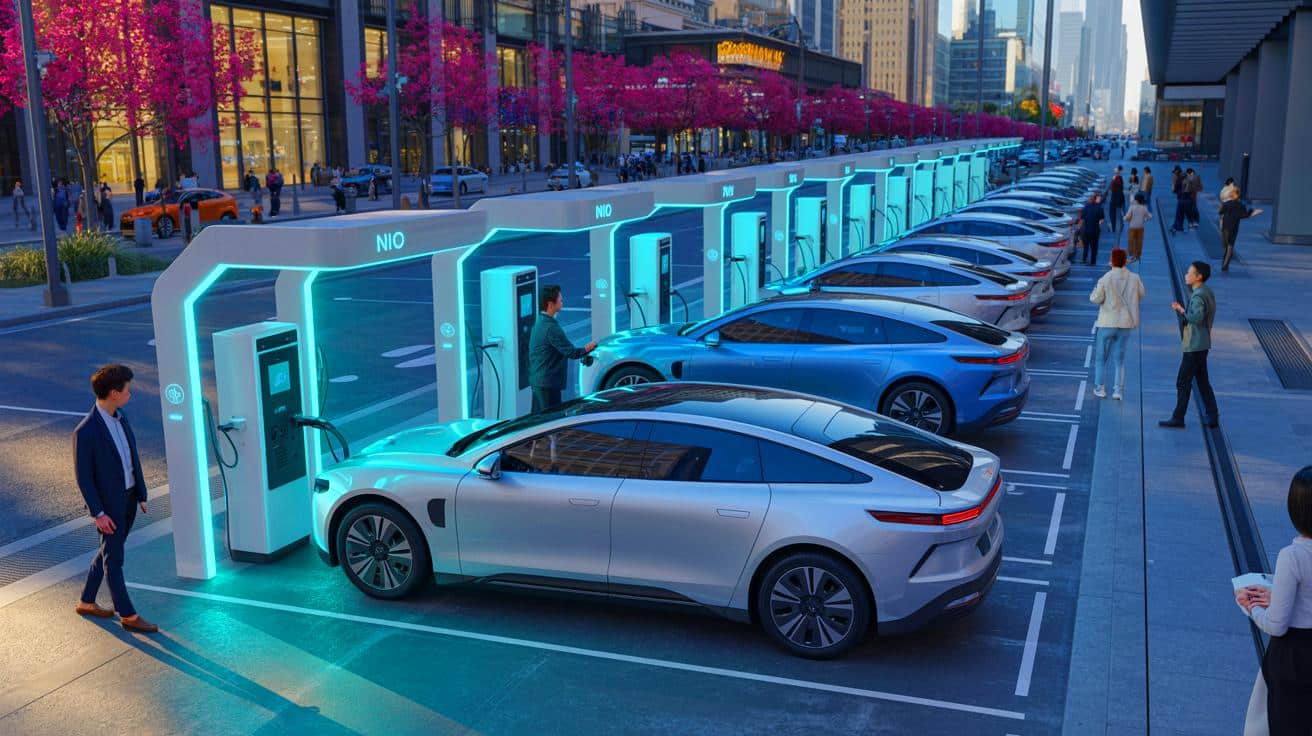
As the world races toward an electrified future, China’s electric vehicle (EV) sector is making significant strides, as illustrated by Nio’s recent record-breaking achievement. The company completed an astounding 145,000 battery swaps in a single day during the “Golden Week” holiday period, highlighting the critical role of battery swap stations in addressing the energy needs of EV drivers. This feat underscores the importance of robust infrastructure in a rapidly evolving electric mobility landscape. As demand for EVs continues to rise, the infrastructure supporting these vehicles must evolve to keep pace, presenting both opportunities and challenges for companies like Nio.
Expanding Battery Swap Stations to Meet Growing EV Demand
Nio has been aggressively expanding its network to meet the increasing demand for electric vehicles in China. This year alone, the company opened 525 new battery swap stations, enhancing accessibility for its growing user base. Currently, Nio’s charging network comprises 27,258 branded chargers and over 1.37 million third-party chargers across the nation. On October 1, during the peak travel period of Golden Week, Nio’s network managed 7,545 swaps per hour, showcasing the increased demand for energy during this time.
The Golden Week, a traditional period of intense travel in China, places a high demand on vehicle energy resources. Nio’s efficient and automated battery swap system, capable of replacing an exhausted battery in under three minutes, was put to the test. Despite this achievement, Nio’s founder, William Li, recently acknowledged that the company may not meet its 2025 goal for expanding its battery swap stations. The initial target of installing 2,000 new stations this year has been revised to between 1,800 and 2,000, with only 488 sites completed by September, approximately 27% of the goal.
Preparing for Multi-Brand Growth and Ambitious Delivery Goals
Nio has diversified its offerings to include seven different battery capacities, ranging from 42.1 kWh to 150 kWh, compared to just two options three years ago. While this variety provides flexibility for consumers, it also adds complexity to the company’s battery swap infrastructure. Earlier this year, Nio filed patents for modular swap stations designed to increase capacity in high-demand areas. Plans are underway to establish larger battery hubs in major cities such as Beijing, Shanghai, and Shenzhen.
The automaker achieved a record number of vehicle deliveries in September, with 34,749 units delivered across the Nio, Onvo, and Firefly brands. As of September 30, the year’s total deliveries stood at 201,221 vehicles, leaving approximately half of the annual target still to be achieved. Nio aims to deliver 150,000 vehicles in the last quarter, bringing the total to 351,000 vehicles, which is about 90,000 units short of its original goal.
Challenges of Expanding Fifth-Generation Stations
Nio faces significant challenges as it transitions to fifth-generation battery swap stations. These new stations promise greater flexibility, increased capacity, and improved performance. The existing fourth-generation system can store up to 23 battery packs and perform up to 480 swaps per day, utilizing LiDAR technology for precise alignment. However, the fifth-generation stations, expected to launch in early 2026, will bring significant improvements.
These new stations will support various battery sizes for Nio and its sub-brands, Onvo and Firefly. This flexibility is crucial, as the fourth-generation stations cannot be adjusted to accommodate different battery sizes, highlighting the need for a new generation of stations. William Li has noted that the company’s resources are currently being redirected toward developing these advanced stations.
Global Impact and Future Ambitions
With 3,520 battery swap stations in China and 61 in Europe, Nio’s expanding global network underscores its ambition to become a key player in the global electric vehicle market. The company remains focused on developing advanced technologies to maintain its competitive edge. As global demand for electric vehicles continues to grow, Nio will need to tackle complex challenges to sustain its growth trajectory.
How will Nio balance its ambitious goals with the practical realities of charging infrastructure development? This question will play a pivotal role in determining the company’s future success in the rapidly evolving electric mobility sector.