“This Is Huge”: France’s New Sea Giant Terrifies Europe (and it’s more powerful than you can imagine)
 By
Daniel Okada
By
Daniel Okada
| IN A NUTSHELL |
|
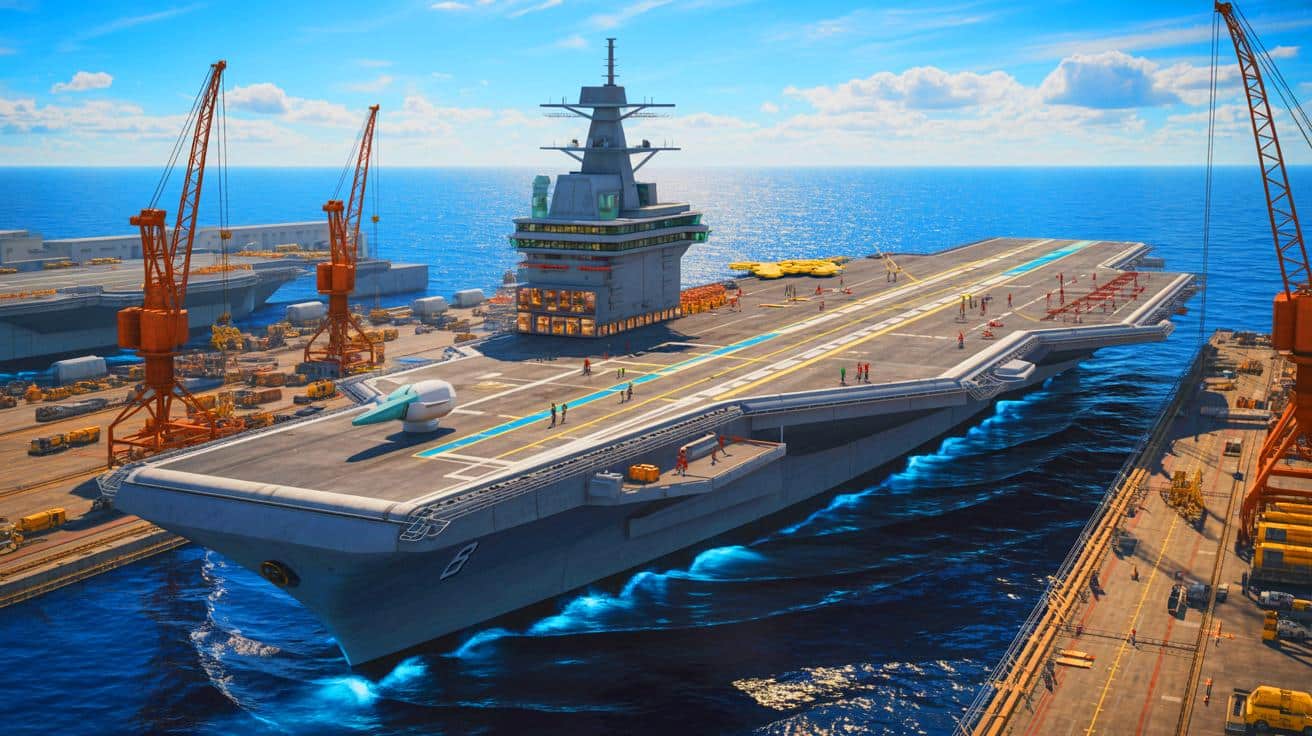
The construction of France’s future aircraft carrier marks a significant milestone in European naval defense. Set to become the largest carrier in Europe, this ambitious project showcases France’s technical and strategic prowess on a global scale. With its impressive dimensions and nuclear propulsion, it promises to redefine maritime power standards. The high costs and varied international reactions underscore the importance of this initiative on both national and international levels. This article delves into the key elements of the project and the challenges it presents.
Technical Features and Innovations
The future French aircraft carrier stands out for its extraordinary dimensions. Spanning over 984 feet and weighing 80,000 tons, it vastly surpasses its predecessors. Its ability to host more than 75 aircraft, including combat drones, highlights its extensive operational capacity. Nuclear propulsion is a major asset, ensuring several years of autonomy at sea without refueling, crucial for extended operations.
The vessel integrates numerous technical innovations. Advanced weapon systems and highly automated onboard operations make it a model of cutting-edge technology. The use of lightweight yet strong composite materials aids in the ship’s stability even in challenging maritime conditions. These features position this aircraft carrier as a symbol of French technological excellence in the naval domain, reflecting the country’s commitment to sustainable and innovative energy solutions.
Strategic and Geopolitical Issues
The construction of this aircraft carrier represents a major turning point for French defense strategy. By possessing such infrastructure, France significantly enhances its ability to project maritime power globally. This vessel is not just a military tool but also a means to strengthen alliances, notably within the European Union and with the United States.
In an increasingly uncertain geopolitical context, this project allows France to secure its national interests and actively participate in international peacekeeping missions. Moreover, it embodies the country’s commitment to a more autonomous European defense, encouraging other member states to develop their military capabilities. This aircraft carrier could thus help reduce Europe’s strategic dependence on the United States, a crucial aspect amid growing international tensions.
Financial and Technical Challenges
The execution of this ambitious project is not without challenges. French shipyards must demonstrate exceptional expertise to integrate advanced technologies while adhering to strict safety standards. Managing financial resources is a critical aspect, with the total cost estimated in billions of euros.
Faced with these financial challenges, France might consider public-private partnerships to ease the economic burden. Careful planning is essential to avoid delays that could compromise the vessel’s operational availability. Technical challenges, such as integrating new weapon and propulsion systems, require rigorous anticipation to prevent complications during construction and commissioning.
International Reactions and Implications
The announcement of this project elicited varied international reactions. For some countries, it represents a show of strength, while others see it as an opportunity to collaborate more closely with France. The United States welcomed this initiative, viewing it as a positive contribution to global security.
Conversely, other nations, such as China and Russia, watch this development cautiously, fearing an impact on their regional influence. This project raises essential questions about the evolution of global naval defense and potential new alliances. For the French naval industry, the implications are also significant in terms of job creation and technological innovation. As the project progresses, how will other nations adjust their defense strategies in this new geopolitical environment?
France’s construction of Europe’s largest aircraft carrier is an ambitious project that could redefine the balance of global naval power. With its technological advancements and strategic implications, it raises crucial questions for the future of European and global defense. How will this project influence international relations and future alliances? What will be the long-term economic and strategic repercussions for France and its partners?