An Invisible Force Strikes: U.S. Stealth Technology Leaves Russian Naval Defenses Powerless
 By
Daniel Okada
By
Daniel Okada
| IN A NUTSHELL |
|
The dynamics of global naval power are continuously evolving, and with it, the strategies that nations employ to maintain their maritime dominance. The United States Navy, renowned for its technological prowess, is now contemplating an integration of diesel-electric submarines into its fleet. This move, driven by both technological innovation and geopolitical pressures, aims to optimize operations in shallow waters. With advancements in Air-Independent Propulsion (AIP), these submarines achieve a level of stealth comparable to their nuclear counterparts. This shift could address contemporary challenges while offering a cost-effective solution, marking a significant transition in the U.S. Navy’s operational capabilities.
Diesel Submarines: A Viable Option for the U.S. Navy?
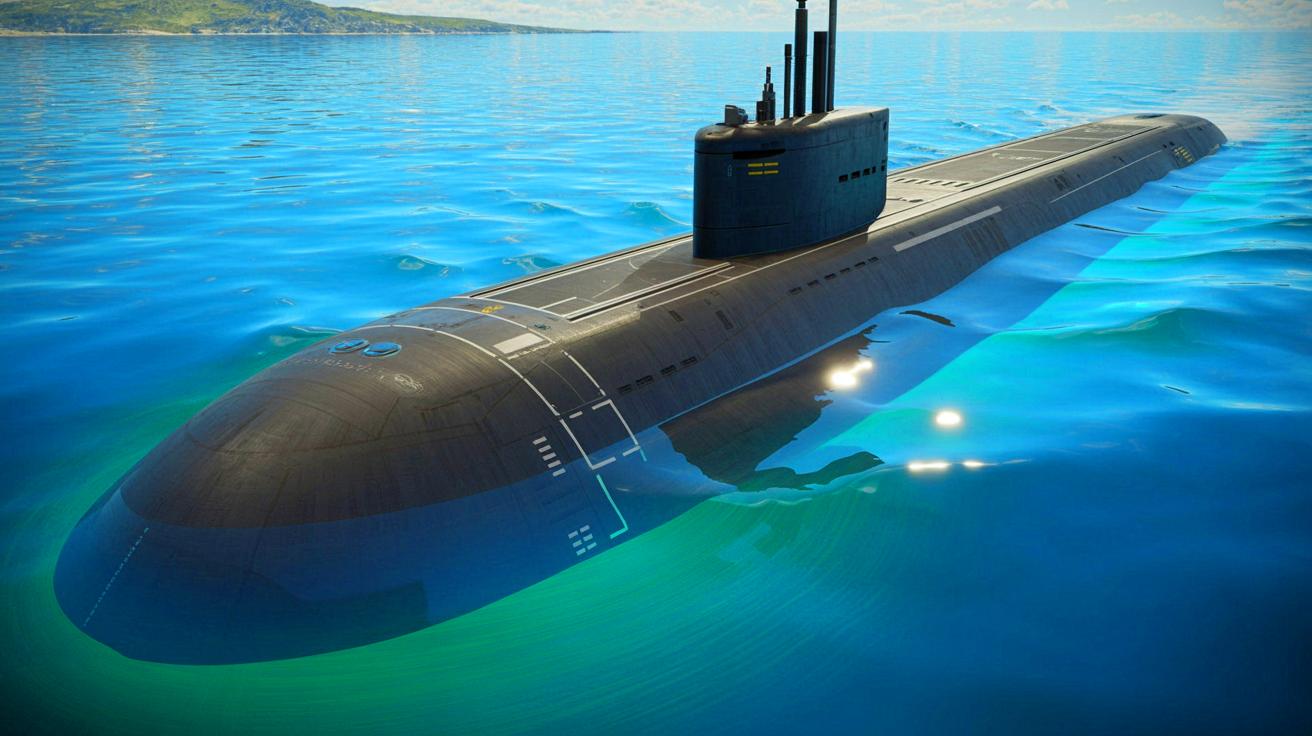
For decades, nuclear submarines have been the hallmark of the U.S. Navy, symbolizing its unmatched maritime strength. However, with changing operational demands, diesel-electric submarines are resurfacing as a viable alternative. Due to their smaller size, these vessels are particularly suited for missions in coastal waters. Their construction is more cost-effective, partly due to the use of Commercial Off-The-Shelf (COTS) components, making them economically attractive. The enhancements in Air-Independent Propulsion (AIP) systems also provide extended operational range and improved stealth. These features could redefine naval strategies amid budget constraints and evolving threats.
Integrating these submarines demonstrates a strategic flexibility in addressing contemporary geopolitical challenges. The ability to adapt and diversify its fleet showcases the Navy’s commitment to innovation and readiness. The economic advantages and operational effectiveness of diesel-electric submarines position them as a strategic asset in modern naval warfare. Their introduction could lead to a paradigm shift in how the U.S. Navy approaches its maritime dominance.
An Exclusive Naval Club
Having nuclear-powered submarines has long been a symbol of naval power. The United States, with its fleet predominantly composed of these giants, holds a significant share of global maritime influence. However, incorporating diesel-electric submarines could reflect a strategic shift in response to current geopolitical challenges. By adapting its fleet, the U.S. Navy demonstrates its capability to meet contemporary needs. The redefinition of maritime power criteria could indeed hinge on such diversification. Diesel submarines, being less expensive, present a strategic option in specific scenarios, propelling the Navy toward a new era of innovation.
The evolving nature of global threats necessitates a versatile approach to maritime strategy. Diesel-electric submarines, with their cost-effectiveness and operational efficiency, offer a compelling alternative. As geopolitical tensions rise, the ability to quickly adapt and deploy versatile maritime solutions becomes paramount. This strategic adaptation underscores the U.S. Navy’s resilience and forward-thinking approach in maintaining its global maritime supremacy.
Trends in Submarine Development
The global investment in submarine technology is poised for significant growth by 2034. While the United States continues to assert its dominance with nuclear submarines, emerging powers like China and Russia are reshaping strategic considerations. The AUKUS pact, which includes Australia, exemplifies this dynamic shift. Despite its nuclear dominance, the U.S. is exploring diesel-electric submarines as a response to evolving threats that require an adaptable fleet. The necessity for diverse operational capabilities is crucial to anticipating future challenges.
Diesel-electric submarines, with their enhanced stealth and extended operational range, offer a strategic complement to nuclear-powered fleets. These vessels provide the flexibility needed to address a wide array of maritime scenarios, from coastal defense to special operations. As global powers reassess their naval strategies, the role of diesel-electric submarines in future conflicts becomes increasingly significant.
Advantages of Diesel Submarines
Diesel-electric submarines possess undeniable advantages for specific missions. Their discretion, vital in coastal waters, is ensured by their size and AIP technology. This advancement allows them to remain submerged longer, making them ideal for special operations. Technological improvements have enhanced their autonomy and stealth capabilities. Additionally, their reduced cost makes them an attractive option amidst budget constraints. These submarines effectively complement nuclear submarines, broadening the spectrum of possible missions for the U.S. Navy.
The integration of AIP systems into diesel-electric submarines has revolutionized their operational potential. Once restricted to surfacing frequently, these vessels now rival the stealth of nuclear submarines. This technological leap opens new opportunities, previously reserved for nuclear-powered fleets. As the U.S. Navy looks to the future, the strategic role of diesel-electric submarines becomes increasingly apparent.
Facing rapidly evolving geopolitical threats, will the U.S. Navy be able to adapt its strategy and equipment to remain at the forefront of innovation while optimizing its resources?