“Flames Engulfed the Horizon”: US Defense Scrambles as Shocking Truth Threatens Nation’s Global Standing
 By
Daniel Okada
By
Daniel Okada
| IN A NUTSHELL |
|
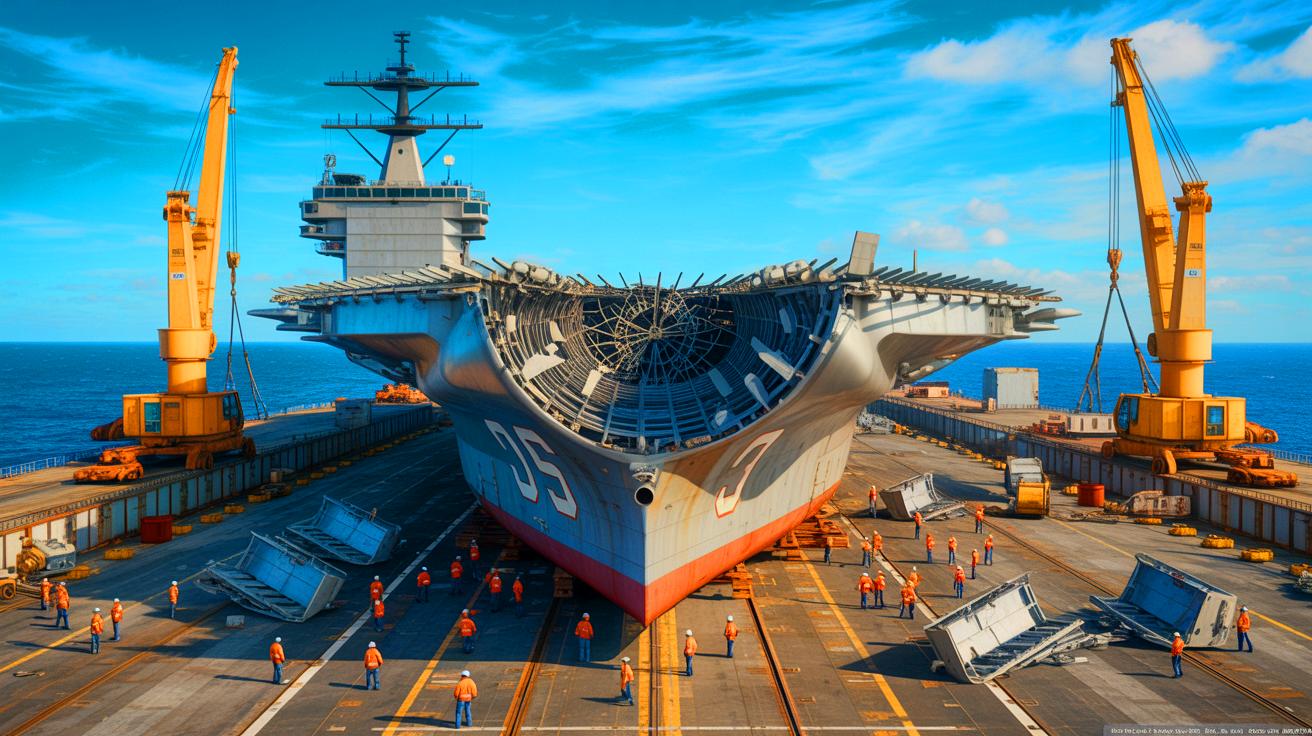
The decommissioning of U.S. nuclear aircraft carriers represents a significant challenge for the Navy. These formidable symbols of military might face a complex end-of-life process that raises substantial economic and environmental concerns. The cost of dismantling often surpasses the recoverable value of the materials, presenting a financial conundrum for the U.S. Navy. Additionally, safeguarding embedded technologies from espionage adds another layer of complexity. The environmental impact of deconstruction procedures cannot be overlooked, necessitating strict protocols to minimize risks. How can the U.S. Navy navigate these challenges while preserving the environment and optimizing resources?
Enormous Costs of Dismantlement
The dismantling of nuclear aircraft carriers presents a significant financial burden for the U.S. Navy. The costs associated with this operation often exceed the value of the recyclable materials. Each vessel requires meticulous deconstruction to extract and recycle valuable metals, such as steel. However, demolition firms face substantial expenses, reducing potential profits. The protection of embedded technologies from espionage is also crucial, further complicating the process. These challenges necessitate strategic planning and innovative solutions to mitigate the financial impact of dismantling.
Given the high stakes, the Navy must find cost-effective methods to manage the dismantling process. This involves not only the physical breakdown of the ships but also addressing the economic implications of resource allocation. Finding a balance between cost management and resource recovery is essential for the Navy to maintain financial stability while handling these decommissioned giants.
Embedded Technologies: Hidden Potential
Despite their apparent obsolescence, the technologies embedded in nuclear aircraft carriers hold potential value. These systems can be modernized and reused, though the recovery process is costly. Equipment such as command and weapons systems requires significant resources for extraction and upgrading. The management of nuclear materials, conversely, demands strict protocols to ensure environmental and health safety. This complexity underscores the importance of a sustainable strategy to optimize the technological recovery of end-of-life vessels.
Investing in the modernization of these technologies could provide the Navy with advanced capabilities without the cost of developing new systems from scratch. Moreover, it could offer additional revenue streams if these upgraded systems are sold or leased to allied nations. The challenge lies in effectively managing the modernization process to ensure safety and cost efficiency.
Recycling Materials: A Potential to Harness
Nuclear aircraft carriers contain significant quantities of recyclable metals. The hulls and metal structures offer considerable potential for recycling. The recovered steel can be reused in shipbuilding, automotive, or construction industries. Although the electronic components may be aging, they can be refurbished for new applications. However, the deconstruction process remains complex, requiring the secure removal of nuclear fuel and strict management of hazardous materials. These complexities call for innovative and sustainable approaches to maximize material recycling.
The potential economic benefits of recycling are substantial, yet the process demands a careful and strategic approach. The Navy must ensure that the recycling methods adhere to environmental regulations while maximizing material recovery. This could pave the way for new partnerships with industries seeking sustainable material sources.
Environmental Challenges and Associated Risks
The demolition of a nuclear aircraft carrier involves significant environmental challenges. Rigorous procedures are necessary to minimize ecological impacts. Preparing an environmental impact statement is essential to ensure proper management of hazardous materials. The complexity of managing nuclear substances adds an additional dimension to dismantling challenges. The U.S. Navy must balance the need to dispose of these vessels with the imperatives of safety, cost, and environmental respect. These challenges highlight the importance of proactive management to minimize ecological and financial impacts.
Environmental stewardship is critical to maintaining public trust and ensuring compliance with national and international regulations. The Navy’s approach to managing these environmental challenges will serve as a benchmark for other military and industrial entities facing similar issues. This responsibility extends beyond immediate impacts, requiring a long-term commitment to sustainable practices.
As nuclear aircraft carriers continue to pose complex challenges, their end-of-life management remains a significant strategic issue. The U.S. Navy must seek innovative solutions to transform these symbols of power into opportunities rather than financial liabilities. With costs and risks constantly rising, what new strategies can be implemented to responsibly and sustainably manage these technological giants?