
Maritime Scandal Unfolds as This Crewless Warship Shocks France and Secretly Threatens Global Naval Balance
 By
Nathan Lieu
By
Nathan Lieu
| IN A NUTSHELL |
|
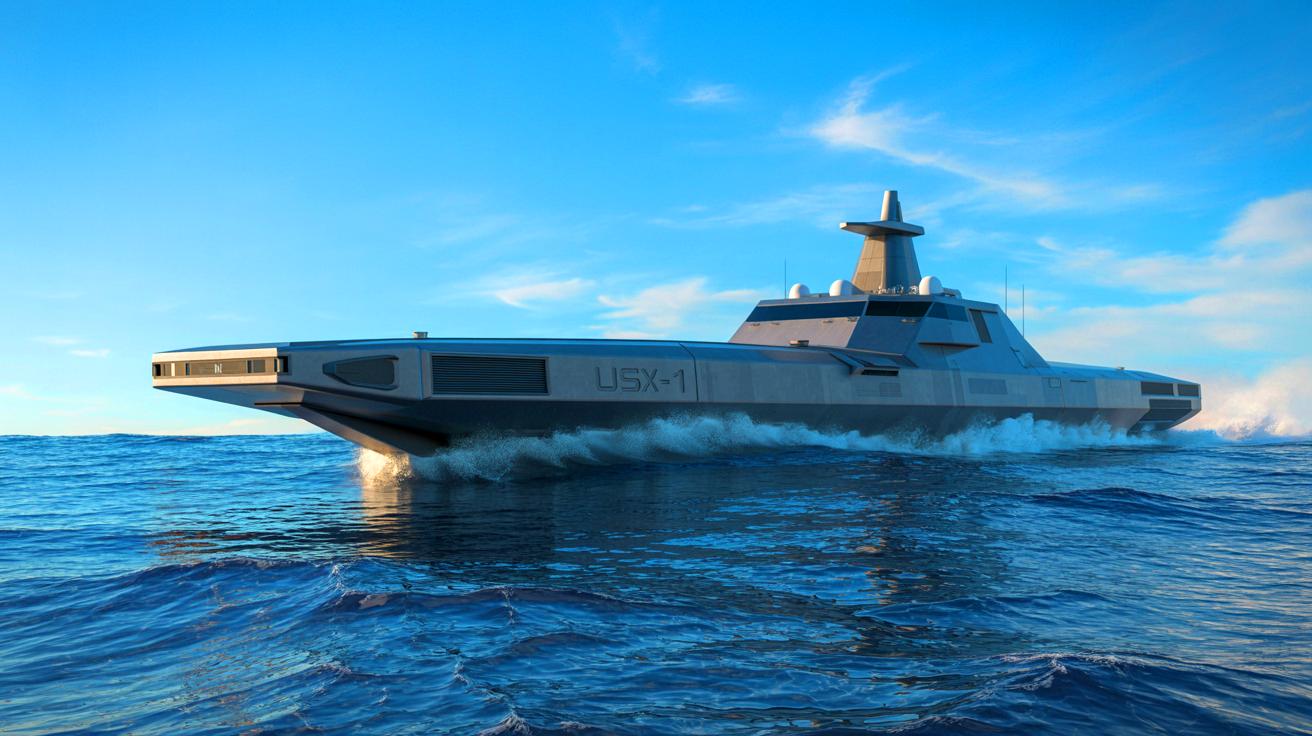
The USX-1 Defiant, a groundbreaking autonomous warship, represents a significant leap in military innovation. With no crew on board, it is designed to maximize space for advanced technologies, paving the way for a new era in naval operations. This unmanned vessel could potentially redefine global naval strategies by offering enhanced operational capabilities and strategic flexibility. As it undergoes sea trials, the Defiant’s performance will be closely watched by military analysts worldwide, eager to understand its implications for future naval warfare.
A Bold Design: The Benefits of a Crewless Ship
The USX-1 Defiant’s crewless design offers multiple advantages. By eliminating the need for onboard personnel, the ship’s size is significantly reduced, which in turn lowers production and operational costs. This space optimization allows for the integration of cutting-edge technologies, enhancing the vessel’s operational capacity.
Moreover, the Defiant can operate autonomously for extended periods, navigating maritime regulations and avoiding obstacles. Its ability to function without human intervention makes it more stealthy and resilient in high-seas combat situations. This autonomy provides unprecedented strategic flexibility, enabling human resources to be allocated to tasks that require direct intervention.
The Legacy of the Sea Hunter: Inspiration for the Defiant
The Defiant builds on the lessons learned from the Sea Hunter project, an autonomous vessel designed for underwater tracking. Sea Hunter demonstrated the feasibility of autonomy at sea, paving the way for the development of more cost-effective and efficient ships. Although primarily a prototype, Sea Hunter proved that an unmanned vessel could reliably operate, setting the stage for future advancements.
Constructed by Serco in Virginia, the Defiant is engineered to endure challenging combat conditions. It is capable of performing maritime patrols, reconnaissance, and aircraft carrier group protection. These capabilities bolster the U.S. Navy’s strategic position, allowing for an effective military presence with minimal human resources.
Strategic Roles of the Defiant
The USX-1 Defiant is designed to complement manned ships by focusing on routine tasks such as maritime surveillance, aircraft carrier escort, and anti-submarine sweeping. By handling these missions, it frees up crewed ships for more critical operations, acting as a force multiplier.
Furthermore, the Defiant could be integrated into arsenal ship deployments, offering unparalleled strategic flexibility. This range of missions enhances the operational capacity of the U.S. Navy, enabling it to swiftly adapt to changing maritime operational needs.
The USX-1 Defiant is poised to redefine naval operations through its autonomous capabilities.
Sea Trials and Future Prospects
The sea trials of the USX-1 Defiant are crucial for assessing its autonomous capabilities. These tests will validate the ship’s effectiveness in various conditions, confirming its potential mission capabilities. The strategic implications of this technology are vast, particularly in reducing the need for onboard personnel and allowing human resources to focus on direct intervention tasks.
The success of the Defiant may encourage other nations to adopt similar technologies, transforming the dynamics of global naval operations. As the U.S. Navy positions itself at the forefront of military innovation, the impact of these technologies on maritime strategies and their global security implications remains to be seen.
The USX-1 Defiant represents a significant advancement in autonomous naval operations. By pushing the boundaries of technological innovation, this crewless warship redefines the role and effectiveness of maritime forces. As sea trials continue, the question remains: how will these innovations transform military strategies, and what will their implications be for global security?