
Neuralink’s Bold Move: Seven Paralyzed Brits to Test Brain Implant That Lets You “Control Tech With Your Mind”
 By
Nathan Lieu
By
Nathan Lieu
| IN A NUTSHELL |
|
Neuralink, the brain technology company founded by Elon Musk, has embarked on its first European clinical trial in the United Kingdom. This groundbreaking initiative, in collaboration with the University College London Hospitals NHS Foundation Trust and Newcastle upon Tyne hospitals, aims to explore how Neuralink’s brain implants can help individuals with severe paralysis control digital and physical devices through thought. This marks a significant milestone in Neuralink’s ambition to democratize its brain-computer interface technology for individuals with neurological disorders worldwide.
Building on Previous Trials: From Arizona to London
Neuralink’s journey into human trials began in the United States in 2024, overcoming initial safety concerns raised by the Food and Drug Administration (FDA). Despite a rejection in 2022, the FDA eventually approved the trials after specific issues were addressed. Since then, five individuals in the U.S. with severe paralysis have received the implants and are using them to control devices through thought.
One of these individuals, Noland Arbaugh from Arizona, became the first human to receive a Neuralink implant. However, the device faced a significant challenge when 85% of its threads lost connection with the brain. In response, Neuralink updated its software, enhancing the device’s ability to read brain signals and maintain performance.
The science of tomorrow: these revolutionary brain implants are restoring sensation to paralyzed patients.
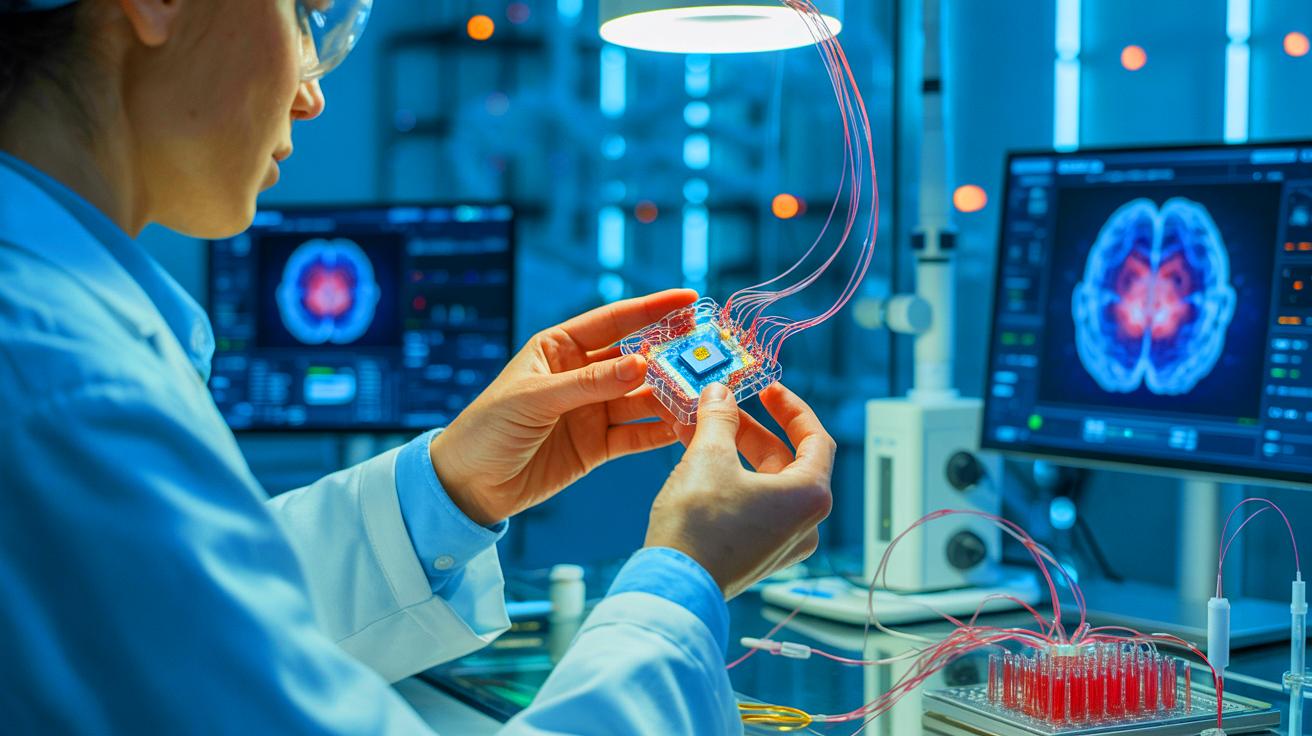
The N1 chip, the core of this technology, is the size of a dime and uses 128 ultra-thin threads, finer than a human hair, to connect approximately 1,000 electrodes to the brain. These electrodes read electrical activity and translate it into digital commands, such as typing on a keyboard or moving a cursor.
Backed by Billions and Daring Ambitions
Founded in 2016, Neuralink has raised approximately $1.4 billion from investors, with the latest funding round bringing in $700 million, valuing the company at nearly $9.6 billion. The company has also begun planning additional trials in Canada and the United Arab Emirates.
“I wrote my name for the first time in 20 years”: Neuralink’s technology gives a paralyzed woman a form of freedom through a brain chip.
The UK trial received approval from the Medicines and Healthcare products Regulatory Agency, with operations utilizing Neuralink’s R1 surgical robot. According to University College London, Neuralink’s technology could transform the lives of those affected by neurological disorders.
Professor Harith Akram, a consulting neurosurgeon at UCLH, stated that the launch “represents a major step in developing brain-computer interface technology, with the potential to transform the lives of people living with severe neurological disorders worldwide.”
Neuralink: animal testing criticized for alarming suffering, technology at the heart of a heated controversy.
Toward a Future of Human-AI Symbiosis?
While the current focus is on assisting patients with severe medical conditions, Elon Musk has previously suggested that Neuralink’s chips could eventually offer enhancements to healthy individuals. He has envisioned a future where the technology could lead to a “symbiosis” between humans and AI, potentially allowing memory uploads or vision restoration.
In a podcast, Musk predicted that hundreds of millions might eventually receive brain implants, claiming it could grant humans “superhuman capabilities.” These statements provoke ethical and scientific debates about the future of brain-computer interfaces and their place in society.
Socio-Economic Impact and Upcoming Challenges
Neuralink’s development of brain-computer interface technology raises significant questions about its socio-economic impact. If successful, the technology could revolutionize healthcare by providing new solutions for individuals with neurological disorders. However, concerns remain about the accessibility and cost of these implants for the general public.
The ethical challenges associated with implementing this technology are also substantial. How can the security of personal brain data be ensured? What will be the eligibility criteria for receiving an implant? These questions, among others, will require careful consideration as the technology evolves and becomes more widespread.
As Neuralink continues to expand its clinical trials and refine its technology, the question of its long-term impact on society remains open. How will this technology redefine our relationship with machines, and what will be the ethical and social consequences?