
Revolutionary Cargo Ship With 192 Solar Panels Sparks Global Tension ‘This Could Change Everything,’ Experts Say
 By
Anjali Mehra
By
Anjali Mehra
| IN A NUTSHELL |
|
The maritime industry is undergoing a significant transformation as it seeks to reduce its carbon footprint and adopt more sustainable solutions. Among the recent innovations is the Blue Marlin, the world’s first solar-powered hybrid river navigation vessel. This ambitious project is a collaborative effort between HGK Shipping and Wattlab, a leader in maritime solar energy. By equipping the vessel with solar panels, it marks a major step towards the decarbonization of maritime transport, a sector responsible for nearly 3% of global greenhouse gas emissions.
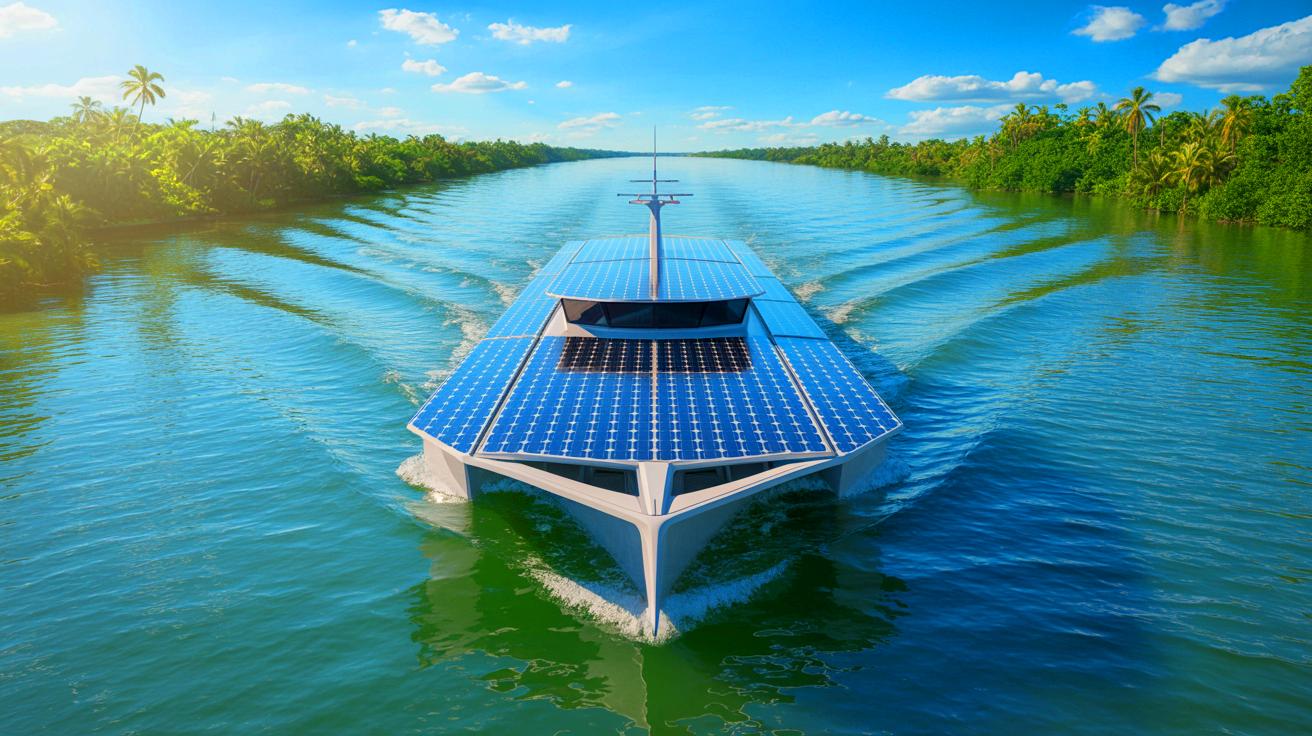
192 Solar Modules on the Blue Marlin
The Blue Marlin is outfitted with 192 solar modules, installed by Wattlab, that directly power the vessel’s electric propulsion system. This unique setup significantly cuts down on fuel consumption. By incorporating this photovoltaic system, the ship can temporarily replace one of its four diesel generators, thereby reducing its ecological footprint. This innovative approach highlights HGK Shipping and Wattlab’s commitment to promoting sustainable solutions in the maritime sector. The solar panels supply power to both onboard systems and propulsion, optimizing the vessel’s energy efficiency.
The adoption of solar energy in maritime transport offers a glimpse into a more sustainable future. As ships like the Blue Marlin demonstrate the viability of solar technology, the industry may see wider adoption of renewable energy sources. The success of this project could inspire other companies to follow suit, furthering efforts to make shipping more environmentally friendly.
A Photovoltaic System Capable of Delivering Up to 35 kW
The Blue Marlin’s photovoltaic system, installed in just two weeks, can deliver up to 35 kW under optimal conditions. This power is integrated into the ship’s propulsion system, complementing the diesel generators. Thanks to automated energy management, the vessel can operate exclusively on solar power during specific periods, such as when it is lightly loaded and navigating downstream. This configuration not only reduces fuel consumption but also enhances the ship’s overall energy efficiency. According to David Kester, co-founder of Wattlab, this approach revolutionizes how energy is utilized on board ships.
With the potential to operate solely on solar energy, the Blue Marlin sets a precedent for future maritime projects. As solar technology continues to advance, the industry may look towards more sustainable practices. This shift could lead to a broader transformation in how the maritime sector approaches energy consumption and emission reduction.
Another Project Born from the Collaboration Between HGK Shipping and Wattlab
The partnership between HGK Shipping and Wattlab extends beyond the Blue Marlin. The two companies previously collaborated on the MS Helios, a 443-foot-long cargo vessel, which holds the record for the most solar panels installed on a river transport ship. This project, which saw the installation of 312 solar panels, underscores the ongoing commitment of these companies to integrate renewable energy solutions into the maritime sector. Beyond river transport, Wattlab is also turning its attention to ocean-going vessels, with projects like the SolarDeck, installed on the Vertom Annette.
These collaborations highlight the potential for renewable energy in maritime transport. As more companies join forces to develop sustainable solutions, the industry could see a significant reduction in its environmental impact. The success of such projects may inspire further cooperation and innovation in the pursuit of a greener maritime future.
Towards Decarbonization of Maritime Transport
The Blue Marlin initiative is part of a broader trend to reduce CO2 emissions and fuel consumption in maritime transport. Wattlab’s recently launched SolarDeck project exemplifies this decarbonization effort. Co-financed by the European Union’s Just Transition Fund, this project has been successfully tested and demonstrates the potential of renewable energies to transform the maritime sector. These initiatives emphasize the importance of collaboration among industry stakeholders to achieve a successful energy transition.
As projects like the Blue Marlin continue to push the boundaries of what is possible with renewable energy, the maritime industry stands on the brink of transformative change. These innovations not only promise a cleaner future but also pose an essential question: how can these technologies be scaled up to transform the entire maritime industry?