“Shivering in Fear, Witnesses Claim Cosmic Horror Eyes Our World” as Scientists Warn of Impending Celestial Turmoil
 By
Anjali Mehra
By
Anjali Mehra
| IN A NUTSHELL |
|
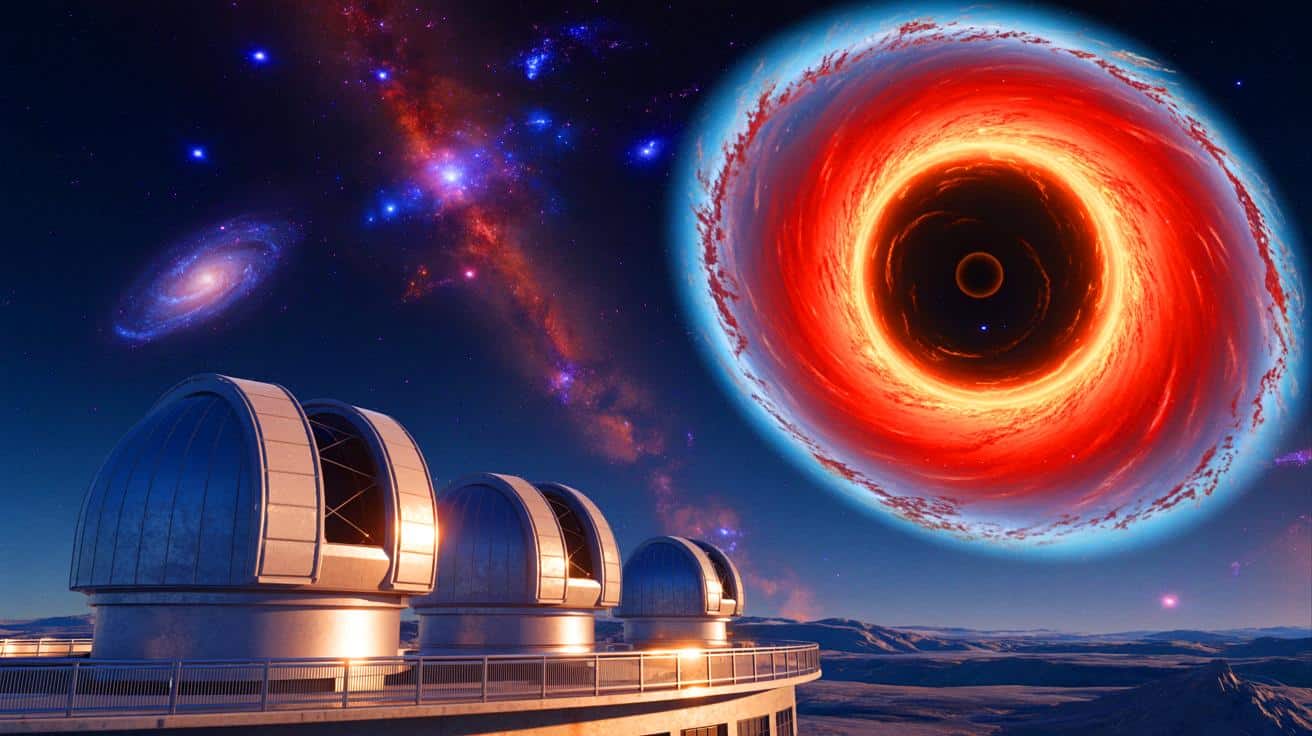
The intersection of artificial intelligence and astronomy is revolutionizing our understanding of the cosmos. Recent technological advancements have allowed astronomers to delve deeper into cosmic phenomena, with a particular focus on the enigmatic black hole Sagittarius A* at the center of our galaxy. By employing sophisticated AI and advanced statistical methods, researchers have estimated the rotational speed of this celestial object with unprecedented accuracy. These scientific achievements not only provide new insights into the matter surrounding black holes but also challenge existing theories. This article explores the innovative facets of this research and its implications for the future of astronomy.
The Role of Artificial Intelligence in Astronomy
The integration of artificial intelligence into astronomy marks a significant milestone in the study of black holes. Researchers have developed a sophisticated neural network, trained on complex computer simulations, to analyze data collected by telescopes such as the Event Horizon Telescope. Through the application of AI, scientists have been able to estimate the rotational speed of the black hole Sagittarius A* with remarkable precision. This advancement not only transforms our understanding of black holes but also underscores the growing importance of modern technologies in scientific research. This innovative approach paves the way for exploring the mysteries of the universe and highlights the potential of AI in expanding our cosmic knowledge.
AI’s application in astronomy extends beyond mere data analysis. It provides tools that enhance the accuracy and efficiency of observations, facilitating a deeper understanding of cosmic phenomena. By leveraging AI, researchers can process vast amounts of data rapidly, leading to more accurate models and predictions. This capability is crucial as we attempt to unravel the complexities of black holes and other celestial entities.
Bayesian Methods: Enhancing Research Reliability
To refine their findings, astronomers have adopted a Bayesian approach, a sophisticated statistical method. This approach has been instrumental in estimating error margins and enhancing the reliability of data. It has proven vital in comparing observations from the Event Horizon Telescope with realistic theoretical models. The findings reveal that Sagittarius A* rotates nearly at its maximum speed, with its axis of rotation directed towards Earth. These discoveries challenge current theories about the matter surrounding black holes and illustrate the method’s efficacy in deepening our understanding of cosmic phenomena.
The Bayesian method’s contribution to astronomy is profound. It allows researchers to incorporate prior knowledge and update predictions as new data emerges. This iterative process improves model accuracy and provides a robust framework for testing new hypotheses. As we continue to explore the universe, the Bayesian approach will remain a cornerstone in the evolution of astronomical research.
Implications for Current Theoretical Models
The recent discoveries regarding Sagittarius A* have significant implications for existing theoretical models. The emissions detected do not originate from a jet of matter but from very hot electrons in the disk surrounding the black hole. This suggests that traditional theories about the behavior of matter near black holes require revision. Scientists must now develop new models to better comprehend these complex processes. The integration of AI and advanced computational techniques is essential for adapting our theories to new data. This approach is crucial for broadening our understanding of the forces governing the universe.
The need to adapt theoretical models highlights the dynamic nature of scientific discovery. As our tools and methods evolve, so too must our frameworks for understanding the universe. The continuous refinement of models ensures that they remain aligned with observational data, fostering a deeper and more accurate comprehension of cosmic phenomena.
Future Directions in Black Hole Research
Researchers are determined to expand upon these discoveries. By refining their models and employing even more powerful computational tools, they aim to explore other phenomena related to black holes. The study of black holes is a dynamic field that continually raises new questions. Modern technologies, particularly AI, play a crucial role in this quest for knowledge. They enable us to unlock the mysteries of these once-inaccessible objects and push the boundaries of our understanding of the universe. Each advancement paves the way for new research and discoveries, promising an exciting future for astronomy.
The future of black hole research is bright, driven by technological innovation and scientific curiosity. As we continue to explore these enigmatic entities, we gain insights that could reshape our understanding of the universe. However, the journey is far from over, and many questions remain. How will these new discoveries influence our theoretical frameworks and vision of the cosmos?
As we continue to unravel the mysteries of Sagittarius A*, modern technologies are transforming our perception of the universe. The combined use of artificial intelligence and distributed computing has led to significant advancements. Yet, a lingering question remains: How will these new insights shape our understanding of the universe and our place within it?