Shocking: A Billion-Dollar Vision Shakes the World as Tech Titan Proposes Unthinkable Feat Linking Continents
 By
Anjali Mehra
By
Anjali Mehra
| IN A NUTSHELL |
|
Elon Musk’s latest proposition to build an underwater tunnel connecting America and Europe has captured global attention. With an estimated cost of $20 trillion, the project has sparked a mixture of curiosity and skepticism. While the concept promises to revolutionize international travel, it presents a multitude of challenges, both technical and environmental. The potential impact on marine ecosystems and the sheer scale of the undertaking raise important questions. This article examines the ambitious vision, the hurdles it faces, and the implications for the future of transatlantic travel.
An Ambitious Vision: A Tunnel Beneath the Atlantic
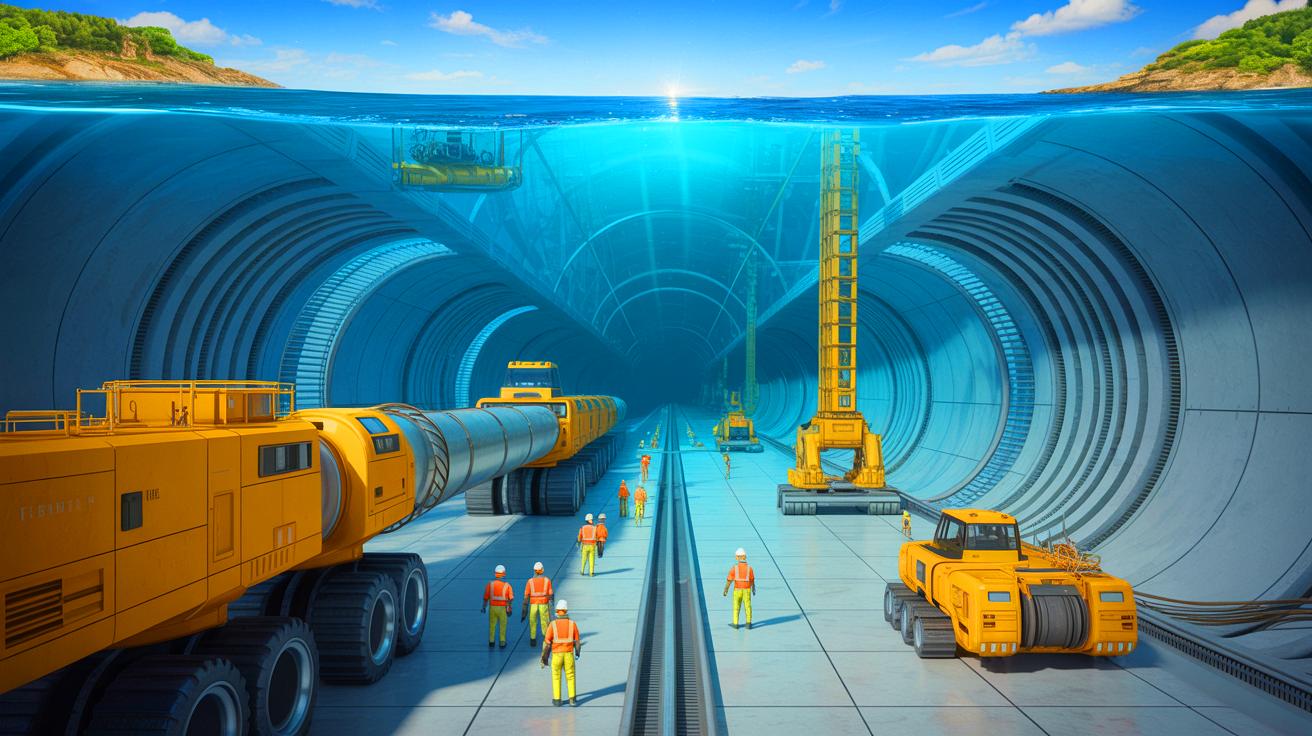
The idea of a tunnel connecting America and Europe is nothing short of audacious. Spearheaded by Elon Musk and The Boring Company, this project aims to create an underwater passage spanning approximately 3,000 miles. The cost, estimated at $20 trillion, dwarfs that of the Channel Tunnel, which connects France and the United Kingdom over a mere 23 miles for around $16 billion.
Musk envisions groundbreaking technologies that could potentially reduce construction costs. However, the project’s technical feasibility remains unproven. The challenges are numerous, and the necessary technologies must still demonstrate their effectiveness. Furthermore, the economic impact of such a project is a topic of debate, raising questions about potential costs and benefits. If realized, this colossal undertaking could redefine international transportation standards.
Technical Challenges: A Monumental Puzzle
Building a tunnel beneath the Atlantic Ocean presents enormous technical hurdles. The oceanic pressure at such depths is a significant barrier. Designing a structure that can withstand these pressures while ensuring safety is a crucial challenge for engineers. Additionally, natural phenomena like underwater earthquakes add another layer of complexity.
The logistics, ventilation, and energy requirements for a tunnel of this length demand innovative solutions. Every aspect of construction and maintenance must be meticulously planned to overcome these obstacles. The project’s safety and viability hinge on the ability to manage these technical challenges. Engineers must develop advanced solutions to ensure the sustainability of this massive infrastructure.
The Hyperloop Dream: A Promising Alternative?
Alongside the transatlantic tunnel, Elon Musk proposes the Hyperloop as an alternative solution. Introduced in 2013, this concept aims to transport capsules at high speeds through vacuum tubes. Although promising, the Hyperloop has yet to prove its capability for large-scale operation. Tests have reached speeds of 240 mph, far short of the target 745 mph.
Adapting the Hyperloop to a transatlantic scale is complex. While considered for shorter distances, its application over thousands of miles underwater presents significant logistical and technical challenges. However, the Hyperloop could revolutionize transportation, offering a rapid and potentially more eco-friendly solution than current methods. The project’s future depends on overcoming these technical hurdles and proving its economic viability.
Economic Costs and Impacts: An Astronomical Bill
Funding the transatlantic tunnel presents a monumental challenge. At $20 trillion, the project’s cost is nearly equivalent to the annual GDP of the United States. Elon Musk promises cost reductions through automation and technological innovations. However, experts remain skeptical about the project’s economic feasibility.
| Project | Estimated Cost | Length | Construction Duration |
|---|---|---|---|
| Channel Tunnel | $16 billion | 23 miles | 6 years |
| California Hyperloop | $10 billion | 373 miles | Not completed |
| Transatlantic Tunnel | $20 trillion | 3,000 miles | Undetermined |
In comparison to other major infrastructures, the transatlantic tunnel represents an unprecedented investment. Whether the potential economic benefits justify such a financial commitment remains an open question. Musk’s promises must be weighed against economic realities. The uncertainties surrounding a project of this magnitude require careful assessment of risks and benefits.
Environmental and Societal Implications
The construction of a tunnel beneath the Atlantic raises significant environmental concerns. Drilling activities could disrupt marine ecosystems, endangering ocean biodiversity. The energy required for such a project could also have a considerable carbon footprint, raising questions about its overall environmental impact.
However, a high-speed connection between continents could reduce transatlantic flights and associated CO2 emissions. Balancing the potential environmental benefits with the ecological costs of the project is complex. These issues require thorough analysis to evaluate the total impact of such an endeavor on our planet.
While the idea of a transatlantic tunnel captivates the imagination, its realization seems distant. Musk’s technological promises must confront scientific, economic, and environmental realities. This ambitious project stimulates discussion about the future of transportation. What will be the next steps to bring this fascinating vision to life?