
“Sky-Engulfing Chaos Unleashed”: New Tech Sparks Global Tensions and Alters Military Power Balances
 By
Nathan Lieu
By
Nathan Lieu
| IN A NUTSHELL |
|
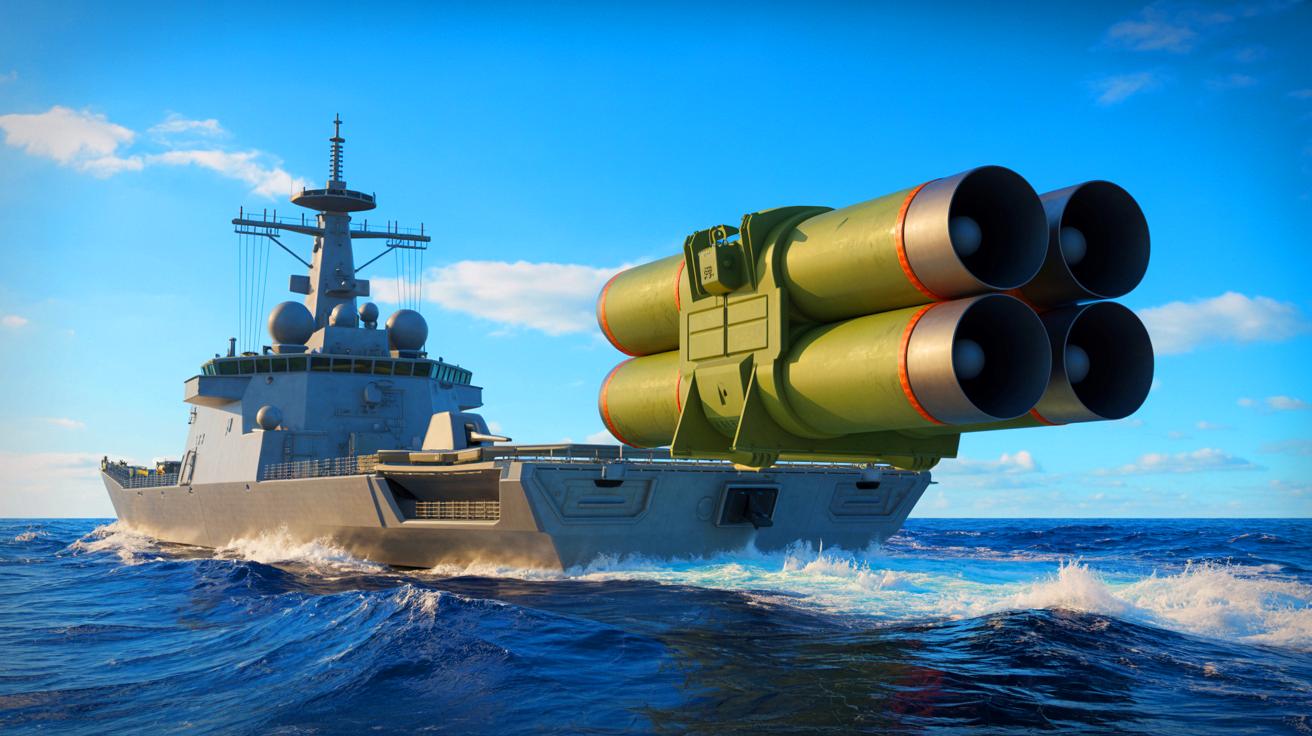
In the evolving landscape of military technology, Lockheed Martin has once again positioned itself at the forefront with the development of the Joint Air-to-Ground Missile (JAGM) and its innovative launch system, the JAGM Quad Launcher (JQL). These advancements promise to significantly enhance the United States Navy’s multi-domain defense capabilities. By offering rapid reloading and advanced software updates, these technologies provide a dynamic response to new-age threats. This strategic leap is crucial for modernizing U.S. maritime capabilities, ensuring dominance across global waters.
Enhancing Responsiveness with the JAGM Quad Launcher
The introduction of the JAGM Quad Launcher (JQL) marks a pivotal shift in naval warfare, primarily due to its rapid reloading capabilities. This feature is indispensable for maintaining naval efficiency during conflicts. Joey Drake, program manager for Multi-Domain Missile Systems, emphasizes the JAGM’s role as a successor to the LONGBOW HELLFIRE, ushering in a new era of deterrence solutions. With its dual-mode seeker, the JAGM can be deployed across various naval platforms, offering unparalleled tactical flexibility.
This missile’s affordability and immediate availability make it an ideal replacement for the LONGBOW. Lockheed Martin ensures a seamless transition, enhancing both defensive and offensive capabilities for the U.S. Navy while optimizing operational costs. The JQL’s rapid reloading ensures that naval forces remain combat-ready, a crucial factor in high-stakes scenarios.
Versatility of the JAGM Against Multiple Threats
The JAGM’s versatility is rooted in its multi-mode seeker, allowing it to effectively counter aerial, maritime, and terrestrial threats. This capability is bolstered by the continuous production of the missile, with over a thousand units already in service. These missiles, equipped on AH-1Z helicopters of the USMC, extend their operational reach to surface vessel self-defense.
Chris Abt, director of advanced concepts, highlights the economic and strategic impact of this adoption. By diversifying the Navy’s strategic options, the JAGM aids in better resource management. Its ability to address both current and future threats ensures optimized logistical support for the U.S. Navy, reinforcing its strategic standing.
Performance Tests and Adaptation to New Threats
The JAGM has proven its effectiveness in performance tests against maritime threats, including unmanned vessels. Regular software updates enable continuous adaptation to unmanned aerial systems (UAS). Whether launched from the surface-to-surface missile module (SSMM) or the JQL, the JAGM offers essential multi-domain engagement capabilities.
Lockheed Martin remains committed to delivering innovative and adaptive defense solutions. As it evolves with strategic needs, the JAGM stands as a cornerstone of modern naval operations. Its adaptability to emerging threats makes it an invaluable asset for the U.S. Armed Forces, ensuring readiness in an ever-changing threat landscape.
Strategic Implications of Maritime Modernization
The modernization of maritime capabilities through the JAGM and JQL could redefine the landscape of American naval defense. These advanced technologies enhance naval security by providing rapid and precise responses. Consequently, deterrence is heightened against increasingly sophisticated threats.
These technological advances underscore the necessity of continuous innovation to maintain a strategic edge in defense. However, a pressing question remains: how will these developments shape geopolitical balances and maritime security on a global scale? As nations adapt to evolving threats, the role of cutting-edge technology in defense strategies will undoubtedly continue to grow.
As military technology continues to advance, the implications for global security and defense strategies remain profound. How these innovations influence international relations and the strategic balance among nations will be a crucial area of focus in the coming years. What steps should be taken to ensure that such advancements contribute to a stable and secure global environment?