“This Caterpillar Wears Dead Spiders”: Shocking Discovery in Hawai‘i Reveals Nature’s Most Macabre Predator in Action
 By
Anjali Mehra
By
Anjali Mehra
| IN A NUTSHELL |
|
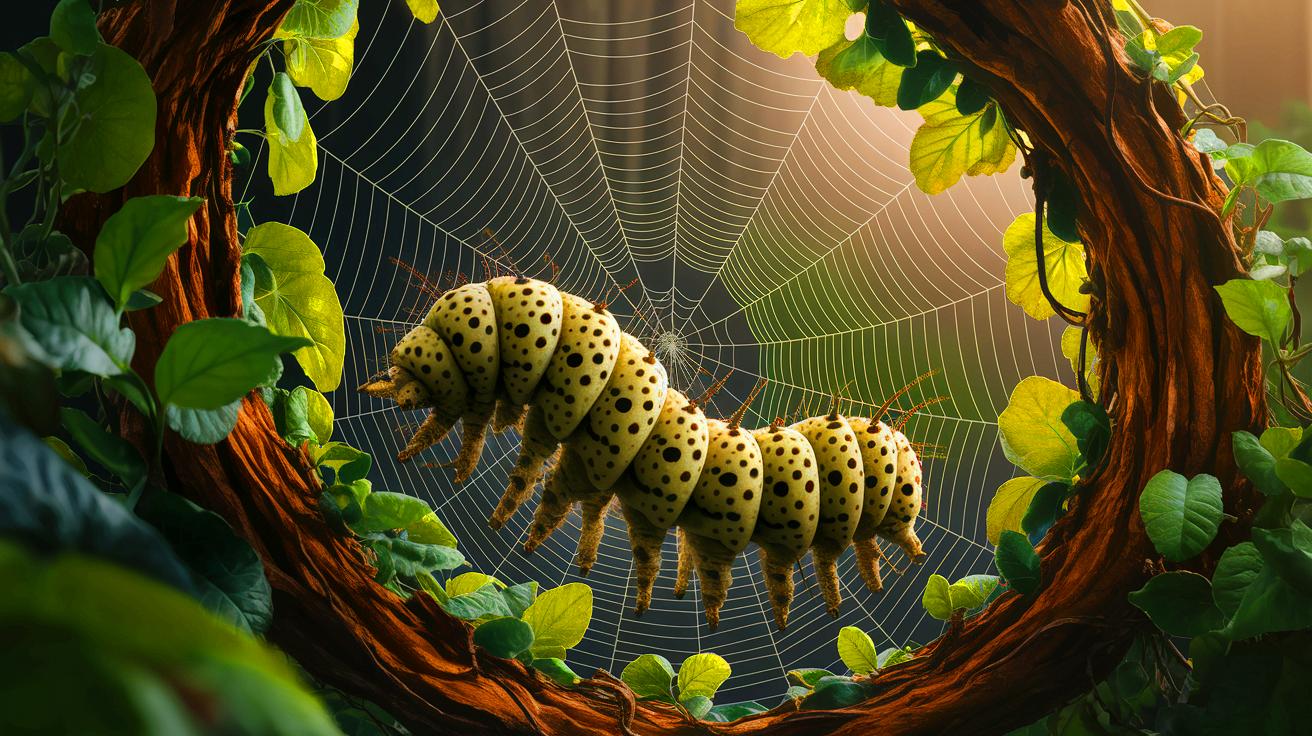
In the dense forests of O‘ahu, Hawai‘i, a remarkable discovery has been made, a new species of carnivorous caterpillar, aptly named the “bone collector.” This elusive predator, a member of the moth genus Hyposmocoma, inhabits the hidden niches of spider webs nestled in tree hollows and rock crevices. The caterpillar’s unique behavior of camouflaging itself with the body parts of dead prey marks it as one of the rarest and most uniquely adapted insects in the world. This discovery not only challenges our understanding of caterpillar behavior but also highlights the untapped biodiversity of Hawai‘i’s isolated ecosystems.
An Exception Among Caterpillars
Among the nearly 200,000 known species of moths and butterflies, the predatory nature of the bone collector caterpillar is a rare anomaly. Predatory caterpillars make up only about 0.1% of the Lepidoptera order. Hawai‘i, with its geographic isolation, has become a hotspot for these unusual species, such as the famous Hawaiian inchworm (Eupithecia spp.). However, the bone collector stands out even among its predatory counterparts. Part of a 5-million-year-old lineage, this caterpillar feeds on dead or weakened insects, often preying on those stored by spiders in their webs. It even cannibalizes its fellow caterpillars when necessary.
One of the most striking characteristics of this caterpillar is its habit of decorating its silk case with inedible insect body parts. These include legs, wings, and other chitinous remains, which serve as effective camouflage to avoid detection by the spiders it lives among. The caterpillar’s selection and sizing of these fragments suggest a behavior that extends beyond mere scavenging. This chilling insect graveyard of a case is a remarkable evolutionary adaptation that aids its survival in predator-rich habitats.
Survival in a Fragile Niche
The bone collector caterpillar, despite its impressive adaptations, faces an uncertain future. Its entire known population is confined to a mere 5.8-square-mile patch of mountain forest on O‘ahu. Although it has shown resilience by adapting to introduced spider hosts, it remains susceptible to the same threats that endanger many native Hawaiian invertebrates, such as habitat loss and invasive species.
The discovery of the bone collector offers a fleeting glimpse into the hidden biodiversity of Hawai‘i. It is a stark reminder of the rich but fragile ecosystems that remain at risk in Earth’s most isolated corners. As researchers continue to delve into and catalog these extraordinary organisms, the call for urgent, targeted conservation efforts becomes ever more critical. This caterpillar’s existence is a testament to the delicate balance of nature and the need for concerted efforts to protect it.
Unique Adaptations and Behaviors
The bone collector caterpillar showcases a fascinating array of unique adaptations and behaviors that set it apart from other species. Its choice to reside within spider webs is not merely opportunistic but strategic, offering protection and a steady food supply. The caterpillar’s ability to adorn itself with remains of other insects serves as both a disguise and a deterrent, reducing the likelihood of becoming prey itself.
Entomologist Daniel Rubinoff and his team have noted that these caterpillars meticulously select and size the fragments they use, indicating a level of behavioral complexity that is rare among insects. This behavior is not only a survival mechanism but also an intriguing insight into the evolutionary pressures that have shaped this species over millions of years. The bone collector’s existence challenges our understanding of ecological interactions and highlights the intricate web of life that thrives in isolated environments like Hawai‘i.
Conservation and Future Research
The future of the bone collector caterpillar depends heavily on conservation efforts and continued research. As one of the rarest known insects, its survival is precarious, reliant on the preservation of its natural habitat and the control of invasive species. The discovery underscores the importance of protecting Hawai‘i’s unique ecosystems and the myriad species they support.
Researchers are now tasked with further studying this species to better understand its ecological role and evolutionary history. The bone collector serves as a powerful symbol of the hidden wonders that await discovery in our natural world. As we strive to protect these fragile ecosystems, we must ask ourselves: What other extraordinary species remain undiscovered, and how can we ensure their survival for future generations?
The discovery of the bone collector caterpillar is a testament to the wonders of nature and the mysteries that still await us in the world’s most isolated ecosystems. Its existence prompts us to reflect on the delicate balance of life and the urgent need for conservation efforts. As we continue to explore and understand these unique species, we must consider: What other secrets does nature hold, and how can we protect these invaluable treasures for the future?