
“This Drone Strikes from 1,000 Miles”: Ukraine Unveils This Aerial Weapon Carrying a Stunning 260 Pounds of Explosives
 By
Nathan Lieu
By
Nathan Lieu
| IN A NUTSHELL |
|
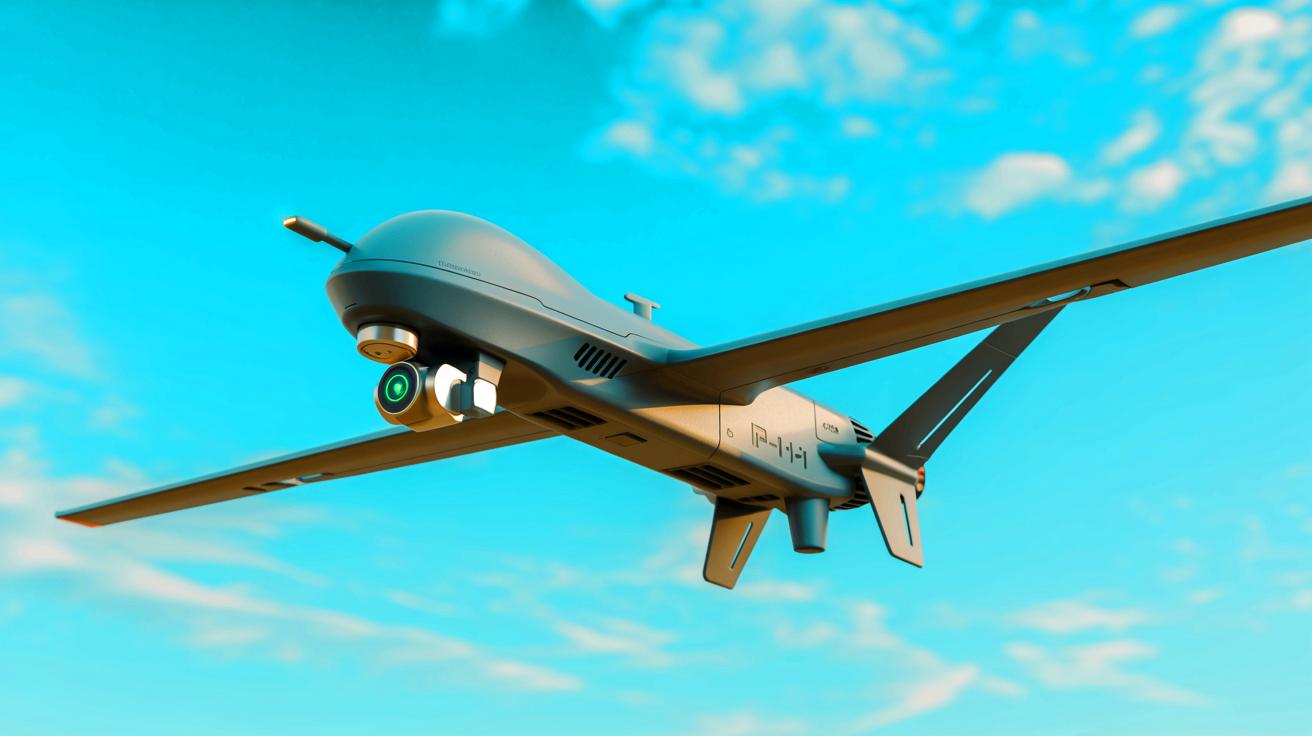
On May 6, 2025, Ukraine made a striking revelation of its latest long-range strike drone, the FP-1, during the Infantry Day celebrations. This drone, designed to reach high-value targets at strategic depths, marks a significant advancement in Ukraine’s ability to conduct sophisticated military operations. The unveiling of this cutting-edge military equipment captivated both national and international attention, highlighting the rapid evolution of drone technology in Ukraine. With its impressive capabilities, the FP-1 represents a new era in military strategy, showcasing Ukraine’s commitment to embracing technological innovation in defense.
Advanced Technology for Long-Range Strikes
The FP-1 stands out with its remarkable ability to fly up to 1,000 miles while carrying a payload of 260 pounds of war material. Ukrainian defense officials have noted that the payload weight can be adjusted depending on the desired range, thus optimizing the drone for either maximum payload or extended operational reach. This technological flexibility allows Ukraine to effectively target critical Russian infrastructures, including those in Crimea and the occupied Donbass region, which were previously beyond the reach of conventional strikes.
Anna Hvozdiar, the Deputy Minister of Strategic Industries, confirmed that the FP-1 is already in mass production, underscoring significant interest from international partners. This growing interest highlights the FP-1’s potential as an export product, thereby strengthening Ukraine’s position in the global defense market. The FP-1 is not merely a drone; it is a testament to Ukraine’s dedication to advancing its military capabilities.
A Strategic Advantage for Ukraine
The FP-1 represents more than just another drone; it signifies a major strategic advantage for Ukraine. Its modular design and the likely use of commercially available parts make it both affordable and adaptable to various military operations. With features such as terrain-following navigation and GNSS-denied capability, the FP-1 is equipped to evade Russian air defense systems, making it a valuable asset for the Ukrainian military.
Since the end of 2022, Ukraine’s doctrine of distributed drone warfare has become a cornerstone of its defense industrial policy. The active support of the Ministry of Digital Transformation for private sector drone developers illustrates Ukraine’s commitment to integrating these technologies into its military operations. Recent successes of Ukrainian drone strikes in Tatarstan demonstrate the increased reach and effectiveness of these systems, solidifying their role in Ukraine’s defense strategy.
Impact on Regional Geopolitics
As the large-scale invasion enters its third year, Ukraine’s deployment of deep-strike drones like the FP-1 is redefining the pace and geography of the conflict. These drones challenge traditional notions of strategic sanctuaries, underscoring the changing nature of modern warfare. The FP-1, as a vector of strategic deterrence and force multiplication, plays a crucial role in Ukraine’s national industrial resilience.
By adopting these new technologies, Ukraine demonstrates its ability to withstand and adapt to complex geopolitical challenges. The implications of these developments for regional and global security cannot be ignored, as other nations observe and learn from Ukraine’s experience. The FP-1 is more than a technological marvel; it is a symbol of Ukraine’s resilience and ingenuity in the face of adversity.
Future Prospects and Challenges Ahead
As Ukraine continues to enhance its military capabilities, questions arise about the future of this technology. How can Ukraine maintain its technological edge in an ever-evolving geopolitical environment? Will international alliances and cooperation with other countries play a crucial role in enhancing these capabilities?
The rapid development of the FP-1 underscores the need for nations to adapt to the new realities of modern warfare. Technological innovation and strategic collaboration will be essential in addressing future challenges. Ultimately, Ukraine’s ability to leverage these advancements will determine its role in the balance of power in Europe and beyond.
Amid these impressive technological evolutions, one question remains: how will Ukraine continue to innovate and adapt its military strategies to stay ahead of its adversaries?