
Concorde’s Unexpected Historical Status: ‘It’s Divisive!’: Aviation Enthusiasts Torn by France’s Shocking Monument Decision
 By
Anjali Mehra
By
Anjali Mehra
| IN A NUTSHELL |
|
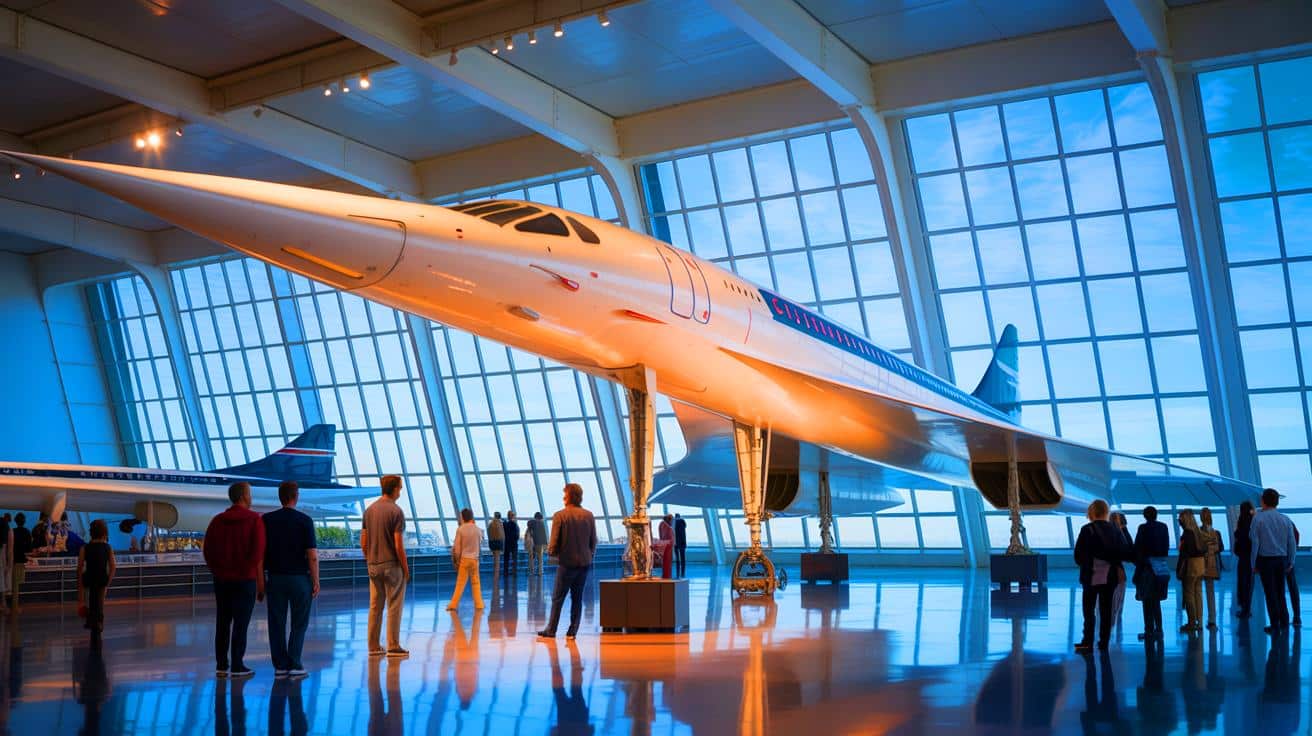
The Concorde, a joint Franco-British supersonic aircraft, recently received recognition as a historical monument. This designation underscores its pivotal role in aviation history. Known for its advanced technology and elegant design, the Concorde quickly became a symbol of prestige. On May 5, 2025, France’s Minister of Culture, Rachida Dati, officially announced this designation. Concorde number 1, on display at the Aéroscopia museum in Toulouse, is among the best-preserved examples. This aircraft is not just an artifact but a testament to technological ingenuity and international cooperation between France and the United Kingdom.
An Icon of Supersonic Aviation
The Concorde stands as a remarkable technical achievement in aviation history. Designed to cruise at Mach 2, it could connect Paris to New York in record time. This extraordinary capability was a result of close collaboration between France and the United Kingdom, two leaders in the aerospace industry. The Concorde represented innovation and French elegance. Despite its high operational costs, it was a dream for many. Traveling on the Concorde was synonymous with luxury and prestige, a privilege reserved for the elite. Today, although retired, it continues to inspire new generations of engineers.
Mind-Blowing Breakthrough: This US Invention Shatters Electric Boundaries With No Battery Needed
A Tragic Yet Glorious Fate
Despite its successes, the Concorde’s history is marked by tragedy. On July 25, 2000, a fatal accident led to its eventual retirement. Flight AF4590 crashed shortly after takeoff, resulting in the death of 113 people. This event marked a turning point in the Concorde’s history. In 2003, the decision was made to withdraw the aircraft from commercial service. However, this incident did not diminish the Concorde’s legendary status. It remains in the collective memory as an example of human achievement when boundaries are pushed. Aviation enthusiasts and museums worldwide continue to celebrate this iconic aircraft.
Preservation for Future Generations
The designation of the Concorde as a historical monument ensures its preservation for future generations. This decision enables the transmission of a crucial chapter in aeronautical history. The Concorde, displayed at Aéroscopia, now serves as both a historical witness and an educational tool. Visitors can admire its unique design and understand the technical challenges it overcame. The conservation of the Concorde also highlights the importance of safeguarding our industrial heritage. Preserving such symbols is vital for inspiring future innovations.
A Legacy That Continues to Inspire
The Concorde continues to influence modern aviation. Engineers and designers draw inspiration from its breakthroughs to develop new technologies. The pursuit of speed and energy efficiency remains at the industry’s core. The Concorde paved the way for new possibilities, encouraging researchers to explore more sustainable technologies. Although the Concorde no longer flies, its spirit endures in current supersonic flight projects. Debates on the viability of such aircraft continue, but the Concorde’s influence is undeniable. It remains a model of what human ingenuity can achieve.
The Concorde’s recognition as a historical monument opens a new chapter for reflection on the future of aviation. How can the lessons from this iconic aircraft guide future innovations in the aerospace sector?