
“It’s Revolutionary”: Cars “Hear Sirens Before Seeing Them” with Fraunhofer IDMT’s Game-Changing Acoustic Sensors That Boost Safety
 By
Nathan Lieu
By
Nathan Lieu
| IN A NUTSHELL |
|
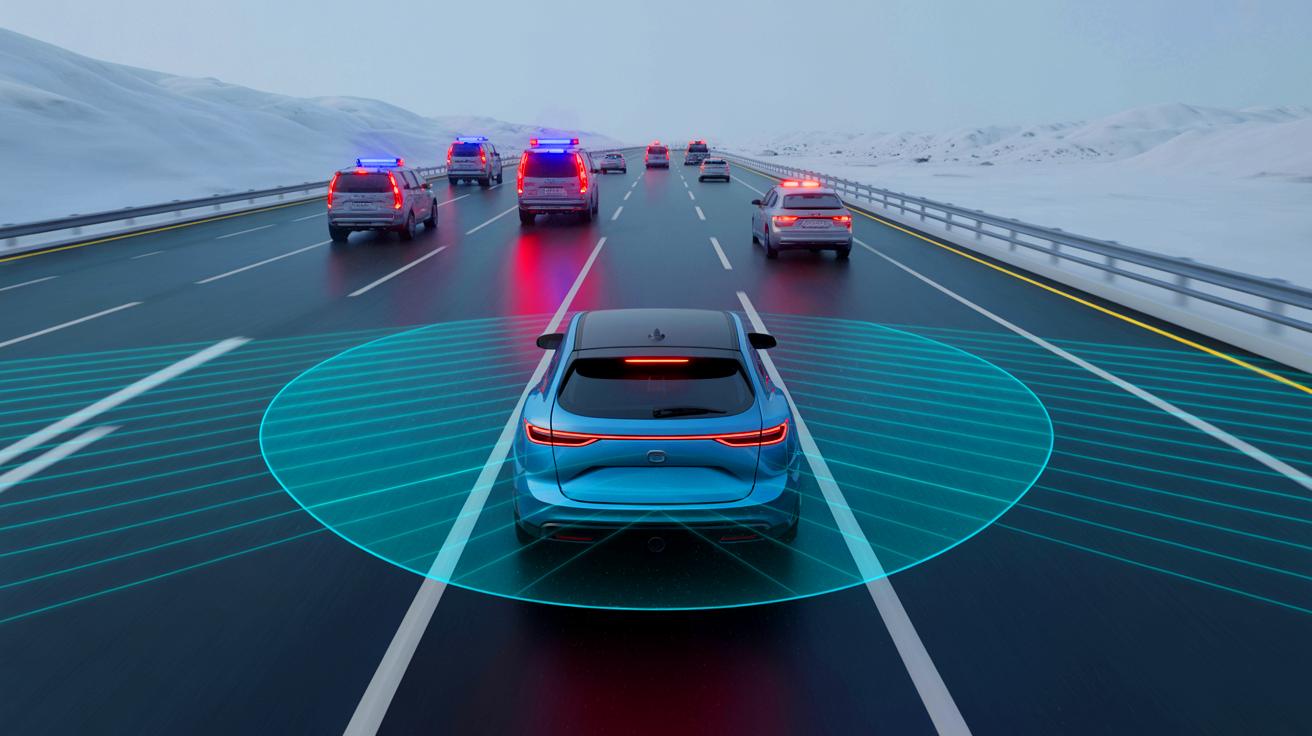
In the ever-evolving landscape of automotive technology, a groundbreaking project is capturing the attention of industry experts and enthusiasts alike. Led by Moritz Brandes at Fraunhofer IDMT, “The Hearing Car” project is pioneering the integration of acoustic sensors in vehicles, promising to revolutionize autonomous driving. Unlike traditional optical systems, these sensors can detect sounds from areas beyond visual range, enhancing road safety significantly. By capturing auditory signals such as sirens before they become visible, this technology enables vehicles to respond more humanely to traffic situations, potentially transforming the driving experience.
Hearing Beyond Vision
The Hearing Car demonstration vehicle is equipped with sophisticated microphones and AI software capable of recognizing and identifying road sounds. These sensors are designed to withstand extreme weather conditions, ensuring accuracy even at high speeds. Rigorous tests, conducted from Portugal to the Arctic Circle, have challenged this technology in various real-world conditions. To ensure drivers do not miss critical signals, important sounds can be directly relayed inside the cabin through the headrest, facilitating quicker reactions.
This project benefits from close collaboration with automotive suppliers and manufacturers, who view acoustic detection as a significant advancement in driver assistance technology. The ability to process sounds that are imperceptible to optical systems marks a turning point in the sector. By integrating sound into the vehicle’s navigation and safety systems, the project aims to bridge the gap between human-like auditory perception and machine precision.
Cars That Listen
The technology enabling vehicles to recognize sirens also fosters more natural interaction with passengers. Drivers can issue voice commands such as “Open the trunk,” while voice verification ensures that only authorized voices can trigger key actions. Inside the cabin, researchers are adding tools to monitor drivers’ health and alertness. A short-range radar measures heart rate and breathing without contact, while mobile EEG headbands track brain activity to detect fatigue. Vocal analysis identifies stress or excitement, providing real-time feedback to occupants.
These innovations aim to create a safer and more responsive driving environment. By monitoring both the external auditory landscape and internal driver conditions, The Hearing Car exemplifies a comprehensive approach to automotive safety and convenience. This integration of auditory technology into vehicles represents a significant shift in how cars interact with their environment and occupants.
Aurora Pierces Our Sky: Military Shock as Spaceplane Redefines US Surveillance at 65,000 Feet
Sound Personalization for Passengers
For passengers, the YourSound system personalizes the onboard auditory environment, allowing users to adjust audio settings to their preferences without technical knowledge. Acting as a virtual sound assistant, it creates a more comfortable listening environment for everyone. By combining external acoustic detection and internal monitoring, The Hearing Car demonstrates how vehicles can evolve beyond cameras and radars to become truly attentive machines.
This research project is supported by the Lower Saxony Ministry of Science and Culture, the Volkswagen Foundation, and the German Federal Ministry of Research, Technology, and Space as part of its KI4BoardNet initiative. The convergence of advanced acoustic technology and personalized passenger experiences marks a new era in vehicle innovation, promising to enhance both safety and comfort.
Blaze of Chaos Seizes Control: Unseen Force Dominates the Seas and Ignites Global Tensions
Future Prospects for the Automotive Industry
The prototype will be showcased from September 9 to 12 at the IAA MOBILITY 2025 in Munich. Experts anticipate that this technology will generate significant interest among industry professionals and the general public. By adding a sonic dimension to driving, this innovation could not only improve road safety but also enrich user experience. However, the integration of such technologies in future vehicles raises questions about user acceptance and the regulations required to govern their deployment. What challenges must be overcome for this technology to become standard in our vehicles?
As the automotive industry continues to embrace technological advancements, projects like The Hearing Car highlight the potential for innovation to reshape everyday experiences. How will these developments influence the future of driving and the relationship between humans and machines on the road?