
The Chinese Diamonds: “These Shatter Our Beliefs”: Global Industry Faces Unprecedented Challenge
 By
Anjali Mehra
By
Anjali Mehra
| IN A NUTSHELL |
|
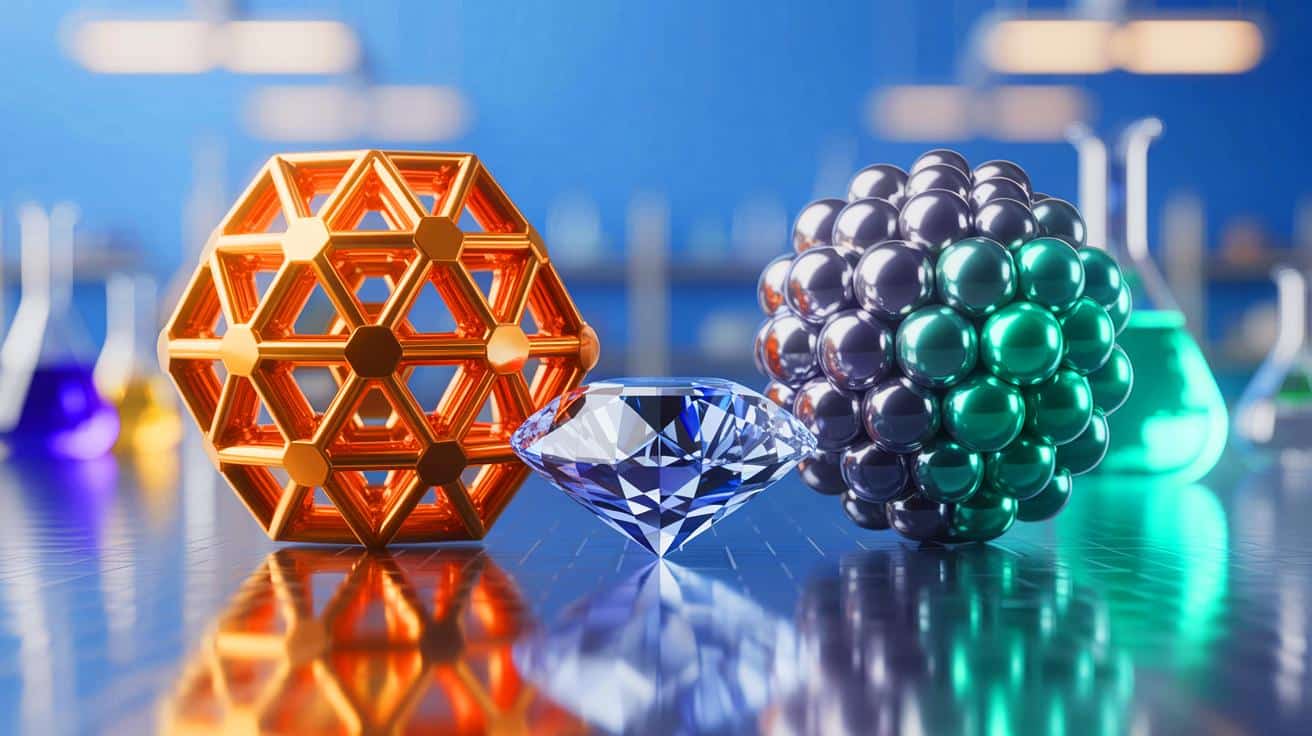
The realm of materials science is undergoing a seismic shift as new discoveries challenge long-held beliefs about the hardest materials on Earth. Traditionally, diamonds have reigned supreme, known for their unparalleled hardness and crystalline beauty. However, recent breakthroughs from Chinese laboratories have introduced two contenders: lonsdaleite and AM-III. These materials not only promise to redefine the standards of hardness but also offer unique properties that could revolutionize entire industries. As researchers delve into the synthesis and potential applications of these substances, the world watches with bated breath, anticipating a future where these innovations play a central role in technological advancement.
The Diamond’s Reign Challenged: An In-Depth Analysis
For centuries, diamonds have been the paragon of hardness, their structure marked by a cubic crystalline lattice and robust covalent bonds. This configuration results in a hardness rating of 70 to 100 gigapascals (GPa) on the Vickers scale. Despite their renowned strength, diamonds possess cleavage planes, making them susceptible to fractures along certain directions. This vulnerability has spurred scientists to seek alternatives that retain diamond’s hardness while eliminating its weaknesses.
Enter the recently discovered materials from China: lonsdaleite and AM-III. Each brings distinct characteristics to the table, offering potential solutions to diamond’s limitations. By challenging the diamond’s supremacy, these materials could redefine industrial standards of hardness and support novel applications across various sectors.
“I built a unique V16 engine”: the DIY YouTuber reveals his crankshaft-less engine assembled with chainsaws.
Lonsdaleite: A Cosmic Origin
Lonsdaleite, also known as hexagonal diamond, was initially found in meteorite craters. Its unique hexagonal atomic structure eliminates cleavage planes, a significant departure from traditional diamond. Chinese researchers have successfully synthesized this material in the lab, achieving a remarkable Vickers hardness of 164 GPa. This breakthrough positions lonsdaleite as a material not only harder but also more resistant to directional fractures.
The potential applications of lonsdaleite are vast, with implications for industrial machining and protective coatings. Its isotropic resistance makes it ideal for scenarios demanding durability and robustness. As industries seek materials that offer longevity without compromising strength, lonsdaleite emerges as a frontrunner in the race for superior materials.
A 2,000-year-old Roman ash brings new life to an eco-friendly cement far more durable than current materials.
AM-III: The Glass of the Future
AM-III, an amorphous material, is created by compressing fullerenes under extreme pressures and temperatures. Unlike lonsdaleite and diamond, its disordered structure offers an isotropic hardness of approximately 113 GPa. What sets AM-III apart is its electronic properties. As a semiconductor, it boasts a bandgap comparable to silicon, paving the way for applications in solar energy and advanced electronics.
This material marks a significant leap in designing multifunctional materials. Its wear resistance and semiconductor capabilities make it particularly suitable for extreme environments, promising innovations in various technological sectors. As industries evolve, AM-III could play a pivotal role in shaping the future of materials science.
500% more YouTube views: this formidable strategy propels influencers to the pinnacle of online business.
“We’re Racing Against Extinction”: The Spacecraft Poised to Save Humanity from Earthly Catastrophe
A New Era in Materials Science
Recent discoveries signal a shift from material exploration to tailored atomic design. Beyond lonsdaleite and AM-III, other materials, such as wurtzite boron nitride, are emerging. These developments highlight scientists’ ability to manipulate atomic structures to achieve specific properties.
These materials “combine exceptional mechanical and electronic properties, and could potentially be used in photovoltaic applications that demand ultra-high strength and durability.”
The implications of these innovations are extensive, spanning aerospace, renewable energy, and cutting-edge electronics, thereby redefining the role of materials in modern technology. As we look to the future, the synthesis of materials like lonsdaleite and AM-III raises critical questions about the future of the materials industry. How will these innovations influence future technologies? What steps are necessary to integrate these materials into commercial applications? These questions will guide future research and define the next chapter in materials engineering.
The innovations in materials science not only challenge existing paradigms but also open up a world of possibilities. As we stand on the brink of this exciting frontier, the potential applications and implications are vast. The real question remains: how will these groundbreaking materials shape the future of our industries and technologies?