
“This Changes Everything”: British Discovery Turns Ocean Water Into Fuel, Threatens Diesel’s Future (and It’s Astonishingly Close)
 By
Nathan Lieu
By
Nathan Lieu
| IN A NUTSHELL |
|
Amid the pressing demand for sustainable energy solutions, a groundbreaking innovation has emerged: the transformation of seawater into eco-friendly fuel. This technology represents a potential revolution in energy production, offering a cleaner alternative for maritime transportation. By converting hydrogen extracted from seawater into fuel, researchers aim to power a wide array of vessels, from yachts to commercial ships, while significantly reducing carbon emissions. The approach not only promises a cleaner future for our oceans but also signals a shift in how we perceive and utilize natural resources for energy.
A New Era of Clean and Renewable Energy
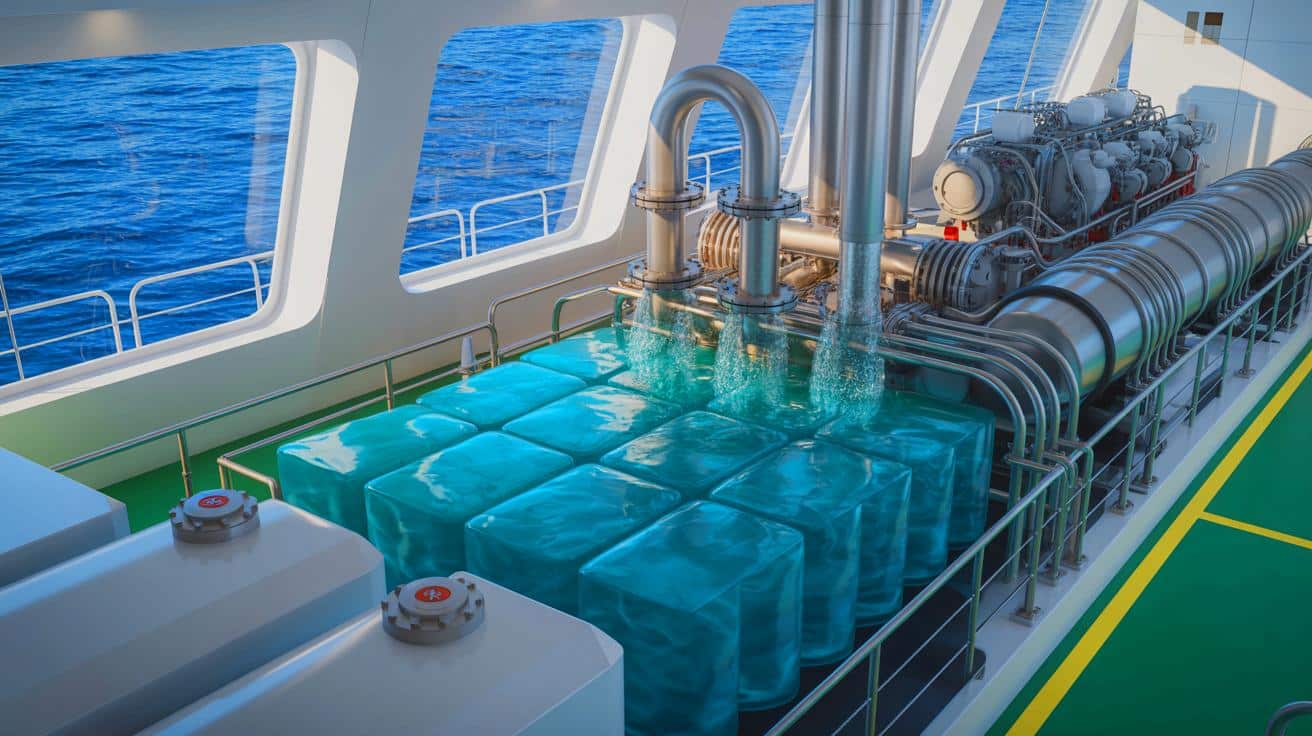
Professor Xinyan Wang of Brunel University in London is at the forefront of this innovative technology. “Water will be transformed into energy,” Wang states, emphasizing the transformative potential of this process. The method involves using renewable electricity to split seawater into hydrogen gas. This hydrogen is then securely stored on board in a solid molecular form and used in engines, effectively replacing diesel and eliminating carbon dioxide emissions.
The technology, developed by Genuine H2, offers a circular “plug & play” solution. It repurposes wastewater or seawater into green energy and pure water. The company’s revolutionary electrolysis units are considered carbon-negative, as they also extract CO2 from water to produce bicarbonates. This adaptable technology can cater to diverse energy needs, whether large or small. Moreover, it is scalable, with universal applications across mobility, infrastructure, commerce, and consumer sectors.
Decarbonizing Maritime Travel
The project has garnered significant financial backing, receiving £1.44 million through the UK SHORE initiative by the Department for Transport and Innovate UK. This funding is part of a larger £30 million investment aimed at decarbonizing maritime travel. The project, known as GH2DEM, marks the first trial of Brunel’s high-power hydrogen engine, soon to be installed on campus. This engine will be fully powered by Genuine H2’s electrolysis and storage system, creating a complete hydrogen chain from seawater to propulsion.
Beyond maritime applications, Genuine H2’s units could establish a network of hydrogen refueling stations for both land and sea uses. This technology has the potential to power urban environments, hospitals, remote farms or communities, mining or construction sites, factories, and other infrastructures.
Technical Innovations and Enhanced Safety
The hydrogen engine systems rely on two major innovations. First, electrodes capable of splitting hydrogen directly from seawater, eliminating the need for expensive desalination processes. Second, a “nano film” thinner than paper, which allows hydrogen to be safely stored in a solid, non-pressurized form at room temperature. This eliminates the need to freeze it at minus 418°F in large, heavy pressurized tanks.
These advancements promise to provide a safe, compact, and ready-to-use fuel source for fishing fleets, coastal ferries, tugboats, and other harbor service vessels.
Potential Impact Across Various Sectors
The ability to convert seawater into fuel could significantly impact multiple sectors. In addition to maritime applications, this technology could power aircraft, trains, cars, buses, and trucks. Its adaptability to diverse environments, whether urban or rural, enhances its potential. The implications for reducing carbon emissions and transitioning to cleaner energy are substantial.
Genuine H2’s units could be integrated into various energy systems, offering increased flexibility and efficiency in overall energy management. As research on this technology continues, a key question remains: how can this innovation be integrated on a large scale into existing infrastructures to maximize its environmental and economic benefits?
The promise of transforming seawater into fuel represents not only a technological breakthrough but also a critical step toward a more sustainable future. As the world grapples with the challenges of climate change and energy consumption, such innovations offer hope and potential pathways forward. How will this unprecedented technology shape the future of energy and transportation, and what steps must be taken to ensure its successful implementation?