Porsche Unleashes New 911 Turbo S: “Hybrid Engine Revolutionizes” Performance, Leaving Competitors Scrambling to Catch Up
 By
Anjali Mehra
By
Anjali Mehra
| IN A NUTSHELL |
|
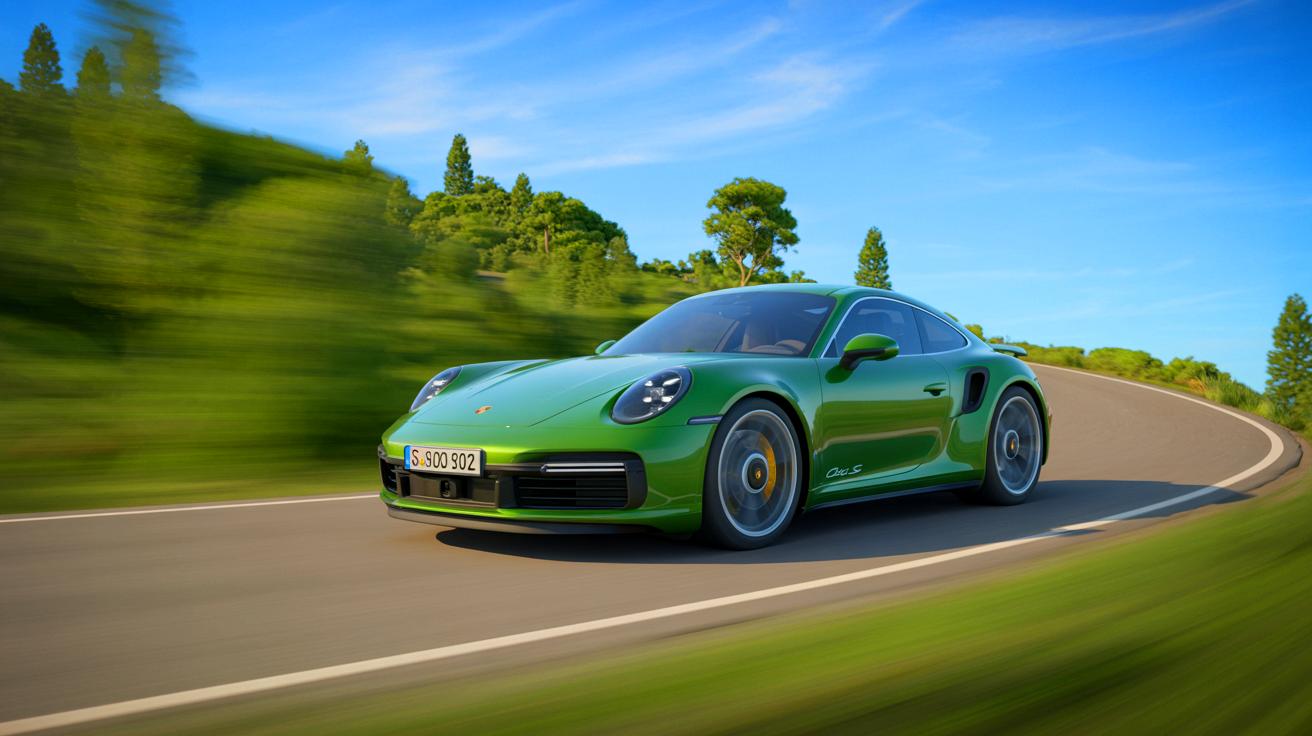
The automotive world is abuzz with the introduction of the new Porsche 911 Turbo S, a vehicle that promises to revolutionize the sports car market. Unveiled at the IAA Mobility show in Munich, this model is a testament to Porsche’s commitment to innovation, blending cutting-edge technology with the brand’s signature luxury. With its groundbreaking T-Hybrid system, the 911 Turbo S is designed to deliver unmatched performance, maintaining Porsche’s legacy of speed and elegance. As it accelerates from 0 to 60 mph in a staggering 2.4 seconds, Porsche sets new benchmarks in automotive performance with this latest release.
Revolutionary Hybrid Engine
The heart of the new 911 Turbo S lies in its advanced hybrid engine. At its core is a 3.6-liter flat-six engine that integrates Porsche’s pioneering T-Hybrid technology. This system includes two electric turbochargers, inspired by innovations from Formula 1. These turbochargers operate at an astonishing 120,000 revolutions per minute, effectively eliminating the lag typically experienced during acceleration. This technological advancement provides a response akin to electric vehicles, ensuring a seamless translation of power from pedal to pavement.
The hybrid engine is not just about speed; it is also about efficiency. Coupled with a 1.9 kWh battery, the engine recovers excess energy, optimizing overall performance. This combination ensures that the vehicle remains responsive, efficient, and powerful, reflecting Porsche’s commitment to sustainable high performance. The integration of such technology demonstrates Porsche’s foresight in the evolving landscape of automotive engineering.
Record-Breaking Circuit Performance
The 911 Turbo S is not only a powerhouse in terms of acceleration but also excels on the track. On the Nürburgring Nordschleife circuit, the hybrid version outperformed its non-hybrid predecessor by a significant margin, clocking in at 7 minutes and 3.92 seconds, which is 14 seconds faster. This achievement is particularly noteworthy given the vehicle’s increased weight of approximately 180 pounds. Despite this, the car remains agile and responsive, thanks to the incorporation of electrohydraulic anti-roll bars, which offer superior responsiveness compared to traditional systems.
Jörg Bergmeister, a test driver for Porsche, highlighted the vehicle’s impressive handling, noting that the added weight does not detract from its agility. “You don’t feel the additional weight. On the contrary, the car is much more agile and faster,” he stated. This performance boost signifies Porsche’s successful blend of hybrid technology with traditional automotive excellence, setting a new standard for sports cars.
Enhanced Comfort and Customization
Beyond its impressive performance metrics, the new 911 Turbo S offers a refined driving experience characterized by comfort and personalization. Frank Moser, Vice President of the 911 and 718 model lines, emphasized that the vehicle is designed for versatility, whether on daily commutes, long-distance journeys, or high-speed track sessions. The model includes exclusive design elements such as “Turbonite” accents, enhancing its luxurious appeal.
However, the absence of a manual transmission may not sit well with traditional enthusiasts who value the tactile engagement of manual shifting. The starting price for the coupe is approximately $284,000, with the Cabriolet priced slightly higher. These figures reflect the brand’s premium positioning and the extensive customization options available to buyers, allowing them to tailor the vehicle to their preferences.
Key Performance Metrics
| Feature | 911 Turbo S |
|---|---|
| Acceleration (0-60 mph) | 2.4 seconds |
| Total Power Output | 701 hp (523 kW) |
| Maximum Torque | 590 lb-ft |
| Nürburgring Time | 7 min 3.92 s |
The new Porsche 911 Turbo S represents a seamless fusion of tradition and innovation, offering extraordinary performance without sacrificing comfort or luxury. While its steep price and lack of manual transmission might deter some potential buyers, the vehicle’s technological advancements position it at the forefront of the sports car market. As Porsche continues to navigate the balance between legacy and progress, one must wonder: how will this model influence the future of high-performance vehicles, and what innovations might we expect next from this iconic brand?